University of Washington Information School faculty members Tanu Mitra and Chirag Shah have received Fulbright awards to advance responsible artificial intelligence through international collaborations in India and Australia, respectively.
Fulbright is the U.S. government’s flagship international academic exchange program. Established in 1946, the program aims to promote mutual understanding between people in the United States and other countries through research, teaching, study and professional exchanges. Participants are selected based on academic merit and leadership potential and are encouraged to develop international relationships alongside their individual projects.
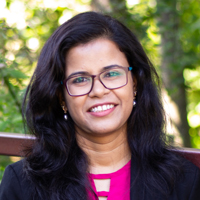
Mitra, an associate professor, received the Fulbright-Nehru Academic and Professional Excellence Award in the research category. She is collaborating with researchers at the Indian Institute of Technology Bombay (IIT Bombay) in Mumbai, India, for four months this fall and winter.
According to Mitra’s profile, published by the United States-India Educational Foundation, her project aims to support “responsible, equitable and globally inclusive AI development” by developing methods to assess the cultural risks of generative AI, particularly in high-stakes applications in the Global South. Working with researchers at IIT Bombay’s Centre for Machine Intelligence and Data Science, she plans to combine AI tools with evaluations by crowd workers and experts to identify cultural biases in AI and assess how well these systems serve different communities.
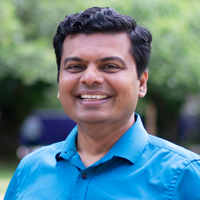
Shah, a professor in the iSchool, received the Fulbright Distinguished Chair in Entrepreneurship and Innovation, which will take him to RMIT University in Melbourne, Australia. Working in conjunction with RMIT researchers and the Australian startup community, he will explore how businesses can use AI agents effectively while maintaining human oversight and accountability.
His project examines what he calls the “Delegation Paradox,” where giving AI systems more responsibility can save time and resources, but it also raises questions about who is accountable when those systems cause harm. Shah hopes to help organizations anticipate AI’s consequences before deploying the technology in their systems.
“This is not a purely technical problem,” Shah said, explaining that responsible implementation requires understanding local regulations and societal norms, along with collaboration across academia, government and industry.
The opportunity is a culmination building on years of connections with RMIT and its researchers, during which Shah has delivered keynotes and collaborated with faculty on data science and AI problems. Shah explained how some of the researchers at RMIT have inspired him since he was a student, and when the Fulbright opportunity opened, it was RMIT colleagues who encouraged him to apply and helped gather support across Australian institutions.
“It wasn’t simply that I applied and got it, but it was this whole network of amazing people from all over Australia who supported and saw it through,” Shah said.
For Shah, receiving the award presents an opportunity to provide leadership and pursue research simultaneously. He hopes to help demonstrate that responsible AI practices can support innovation, enabled by Australia’s openness to collaboration among universities, government and smaller businesses.
The experience will also give Shah an opportunity to learn more. While the project builds on his existing work in responsible AI, Shah wants part of it to take him into unfamiliar territory.
“I always want to learn,” he said. “And I’m not going to learn by doing the same exact thing over and over again.”
Shah expects to begin the exchange in Australia in 2027, with specific dates still being finalized. As he plans the project, he hopes the experience will expand his individual relationships into sustained collaboration between the UW and RMIT, creating opportunities for students, faculty and researchers.
“The individual may be the catalyst, but then the work expands opportunities between these two countries,” Shah said.