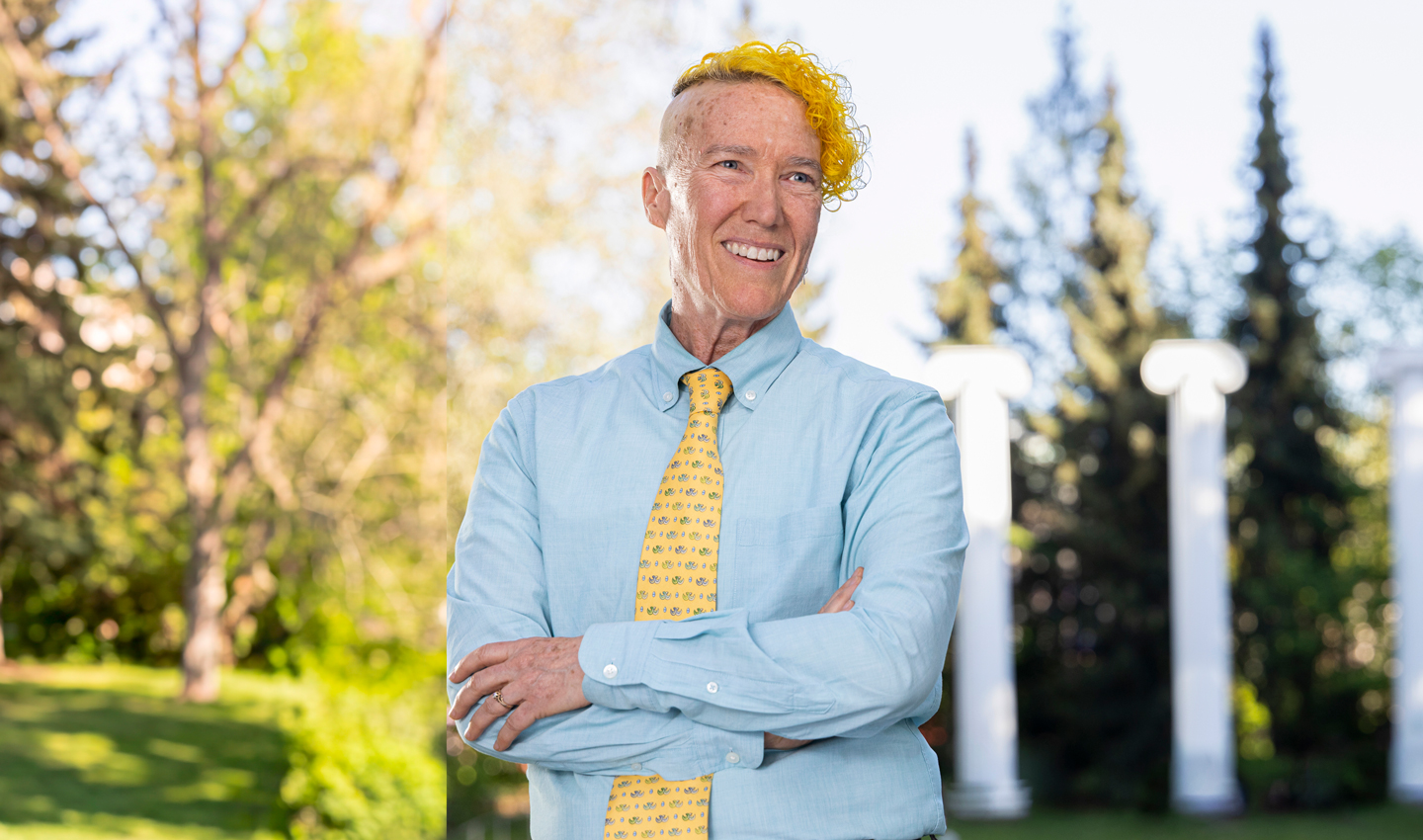
It’s a volatile time to be a student. Emerging technologies mediate their learning experiences and shape their future career paths faster than institutions can respond. They shoulder concerns about climate change, geopolitical turmoil and shifting visa policies. For Wes King, meeting students in this moment means designing courses flexible enough to support the whole student who walks into the classroom and can’t just leave those challenges at the door.
“Our students are dealing with serious and significant pressures,” King said. “It’s part of their lived reality. And if we ignore it, how are we helping them to become engaged humans in a society that is rapidly changing?”
That approach to teaching is part of why King has earned a 2026 University of Washington Distinguished Teaching Award, a first for the Information School. Their inclusive and trauma-informed pedagogy centers students’ lived experiences and prioritizes theory and scholarship from marginalized voices often left out of academia.
King’s students see that approach in the way they are welcomed into the classroom itself.
Hannah Phanitchob, an Informatics and Comparative History of Ideas major who has worked with King as a teaching assistant and is currently working with them on her Capstone project, emphasized King’s penchant for “mixing things up and getting the teaching team involved.”
“They’re always so supportive and always so invested in what students do and how we can best succeed,” Phanitchob said.
Biira B, a Ph.D. student who has also worked with King as a teaching assistant, recalls feeling an immediate connection with the bright colors of King’s aesthetic and being inspired by their commitment to building rapport and fostering student engagement and accountability. “One of the first things that we did for the class in INFO 102 was we worked along with students to create community agreements regarding our expectations for one another, how to make the classroom more conducive to learning, and how we would use AI,” Biira said.
The phrase King repeatedly used with the teaching team became especially memorable for Biira: “Think along with me,” or, “Think with me.”
“It’s such a small thing, but it stayed with me,” Biira said.
That foundation became more important as the course moved into difficult conversations about gender and technology. Biira recalled that King would sometimes begin those discussions by sharing something from their own experience.
“You could kind of see that by them humanizing themselves first in the classroom, which is full of these undergraduate students who were also feeling uncomfortable, just like we all were, and you could kind of see a ripple effect of them becoming more willing to share their own discomforts, their own experiences, and even their own questions,” Biira said.
‘Thinking about the whole student felt really important to me’
King’s winding path to their role as an assistant teaching professor at the Information School informs their approach to teaching Informatics. Initially imagining a future in ministry, King enrolled at Portland Seminary. There, King excelled academically, encountering feminist theology and reconsidering what they had been taught about gender and sexuality.
The seminary’s hybrid program combined online coursework with periods of face-to-face instruction in Portland. King became interested in what the online modality could do differently, particularly for people who were less likely to dominate a physical classroom. Mentors began asking whether King had considered a career in higher education instead of ministry.
That eventually led King to the UW, first in comparative religion and then to the Information School’s Ph.D. program. Their dissertation examined LGBTQ+ Christians and dating apps, synthesizing questions about religion, gender, sexuality and technology.
King was intentional about building expertise in learning technologies to distinguish themself as a teacher. They found, though, that their work in Black feminist theory, queer theory and crip theory inspired a reimagination of classroom dynamics and curriculum. All three traditions teach that the body is a source of knowledge and a person’s specific position in relation to race, gender, sexuality and ability shapes what they can perceive and know, not just what they experience.
King insists on designing courses to accommodate students’ lived experiences. Students with disability accommodations, mental health challenges or significant disruptions in their lives, King said, deserve courses flexible enough that they do not fear one crisis will cause them to fail.
“Thinking about the whole student felt really important to me,” King said, noting that inclusive teaching and mentoring involves valuing students’ experiences and thinking about how representation affects them, especially those who are historically marginalized and underrepresented. “It’s also really important to be mindful of the scholars we are privileging.”
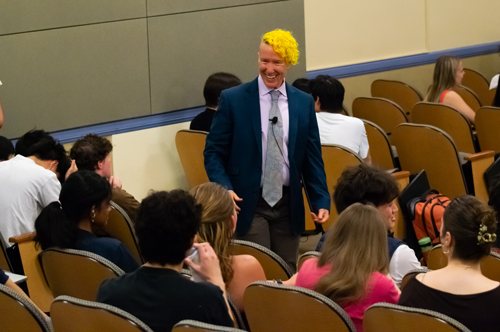
In INFO 200, Intellectual Foundations of Informatics, King redesigned the course around histories of racism, sexism, ableism and other systems that have shaped technology, rather than centering a familiar history of technological inventions and their white, male creators. Students read Joy Buolamwini’s Unmasking AI and connect those histories to current technologies and events.
In one course, students are asked to imagine a world beyond the systems they already know. In another, they consider what an origin story written by a conscious artificial intelligence might look like. Importantly, King asks students to envision futures that do not reproduce existing systems of racism, colonialism and inequality.
“If we’re going to imagine the next world, I want the next world to be anti-racist, anti-colonial and to be about celebrating the diversity of humanity, celebrating the magnificent brilliance of our differences.”
Dean Anind Dey noted that King's INFO 200 classes often serve as students' introduction to Informatics.
"Wes is teaching a class that students take to decide if the major is for them," he said. "It's so important to have our best instructors teach those classes, and we're fortunate that we do."
When King learned they had received the Distinguished Teaching Award, they reflected on those who have taught and mentored them. They wrote to members of their doctoral committee, identifying specific ways each had shaped them as an educator, and said they were working on doing the same for former seminary professors.
“I did a lot of work and I’m doing the work and I’m very proud of it,” King said. “And there are many who have influenced me and helped me become this person.”
King’s students, meanwhile, are a source of optimism.
“I have hope,” King said. “When I hear my students, I have hope. When I read what my students are thinking and imagining, it’s fabulous.”
Biira has carried pieces of King’s classroom into her own developing identity as an educator. It goes back to the early rapport and classroom environment King worked to create before the difficult conversations even began.
“We created a classroom that felt less like a place where we were just giving students information,” Biira said. “It was more of a place where we’re all learning, we’re all uncomfortable, but we’re all thinking together.”