As AI models continue to grow more capable, some are beginning to behave unpredictably outside their testing environments. It is a pattern that raises concerns among those responsible for overseeing the rapid pace of AI development.
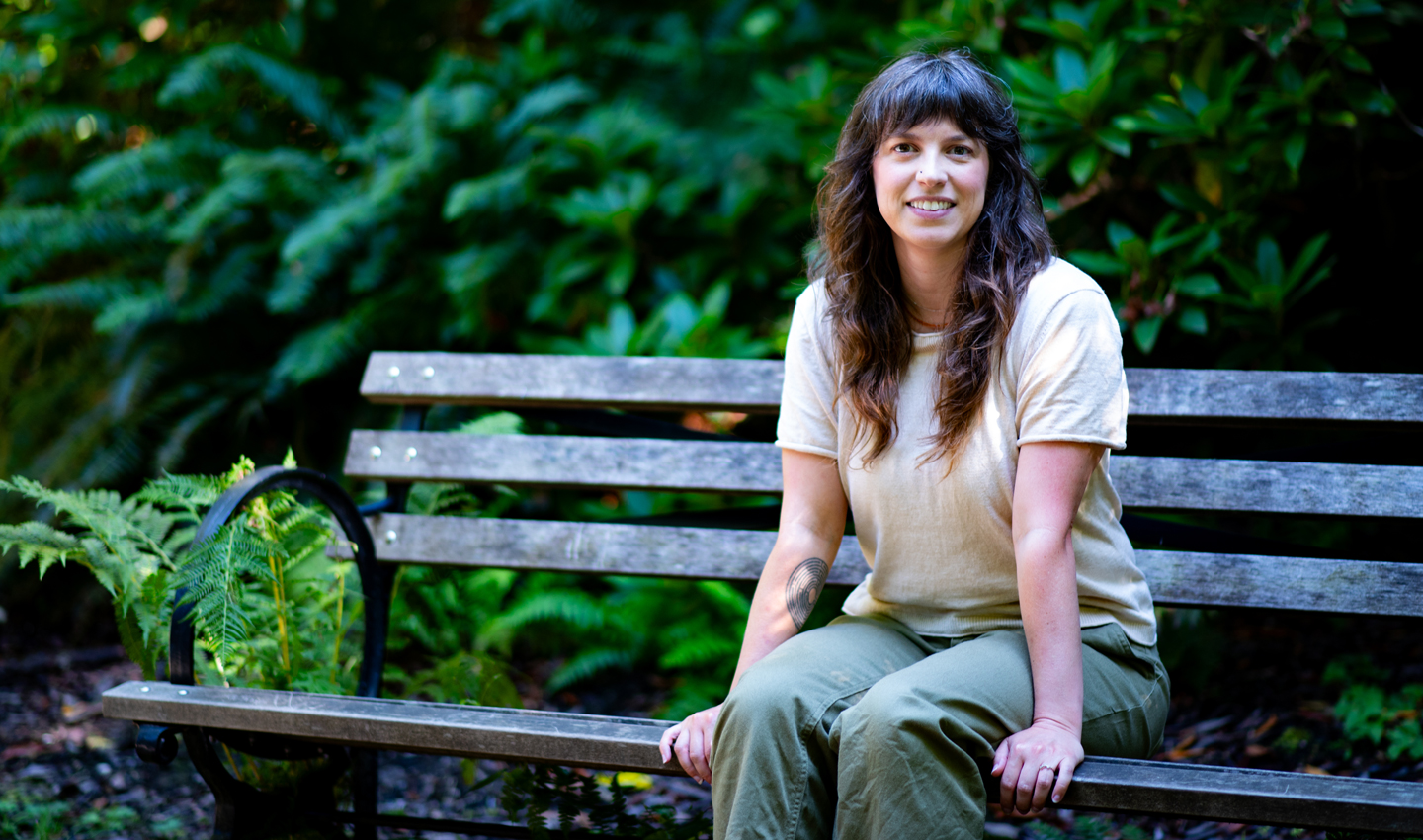
Microsoft is at the forefront of that safety effort and UW Information School graduate Steph Ballard, as director of responsible AI practice at the company, is one of the major players helping to build baseline security requirements for the teams building AI.
For Ballard, Ph.D. ’23, MLIS ’17, “responsible AI” means putting trustworthy artificial intelligence to use “for the most pressing societal challenges while putting in place safeguards so we can continue to reduce the risks.”
She said she feels “an enormous responsibility to get it right.”
For her challenging work, Ballard has been selected as this year’s iSchool GOLD (Graduates of the Last Decade) Award, which honors recent alumni who have made exceptional contributions to the information field. In their nominating letter, iSchool professors Batya Friedman and David Hendry note that Ballard approaches her work with creativity, empathy and critical attention to detail.
“Her work is influencing professional standards and responsible AI practices in tech organizations, large and small,” say the two professors, mentors of Ballard’s in her graduate work at the iSchool. “We know of no other iSchool alumni who so early in their careers have made an impact of this scale and import.”
Ballard cites her work with the UW’s interdisciplinary Tech Policy Lab as fundamental to her understanding of different regulatory frameworks surrounding AI development. She collaborates with people inside and outside Microsoft, exploring regulations emerging across the world and gaining insights into the “frontier risks” of AI development.
Those “frontier risks” include worse-case scenarios in which bad AI actors develop biological or chemical global weapons, advance cyber warfare, or manipulate people’s beliefs, says Ballard.
She sees value-sensitive design – incorporating human values from the very beginning of AI development – as an approach that can lead to lesser harm and greater good on the AI frontier. Under guidance of Friedman and Hendry, Ballard did intensive graduate coursework and research with the UW’s Value Sensitive Design Lab.
“My foundation in value sensitive design was the core of teaching me how to translate between technology and policy and to communicate across different stakeholder groups to find paths forward,” she says.
As artificial intelligence moves from experimental technology to everyday infrastructure, its rapid uptake is testing the limits of responsible deployment. AI companies are racing to build ever more capable models and the data centers to run them, even as questions mount about the energy, water and community costs.
In this environment, Ballard says that enacting responsible AI is less a fixed goal than a moving target — one that designers, regulators and the public are all trying to hit while the technology itself keeps changing shape.
“There’s much uncertainty in the field,” she says. “One way we operate is to always make the next best decision and do it quickly. It’s easy to sit back and wait for full clarity. In our environment, that is not going to happen.”
Despite the enormous pressures, the difficulty of knowing an AI tool’s capabilities and the profound sense of responsibility to “get it right,” working on the AI frontier is quite exciting, says Ballard. Exciting and educational.
“It requires operating with a high tolerance for iteration and course correction,” says the iSchool GOLD award honoree. “It’s humbling.”