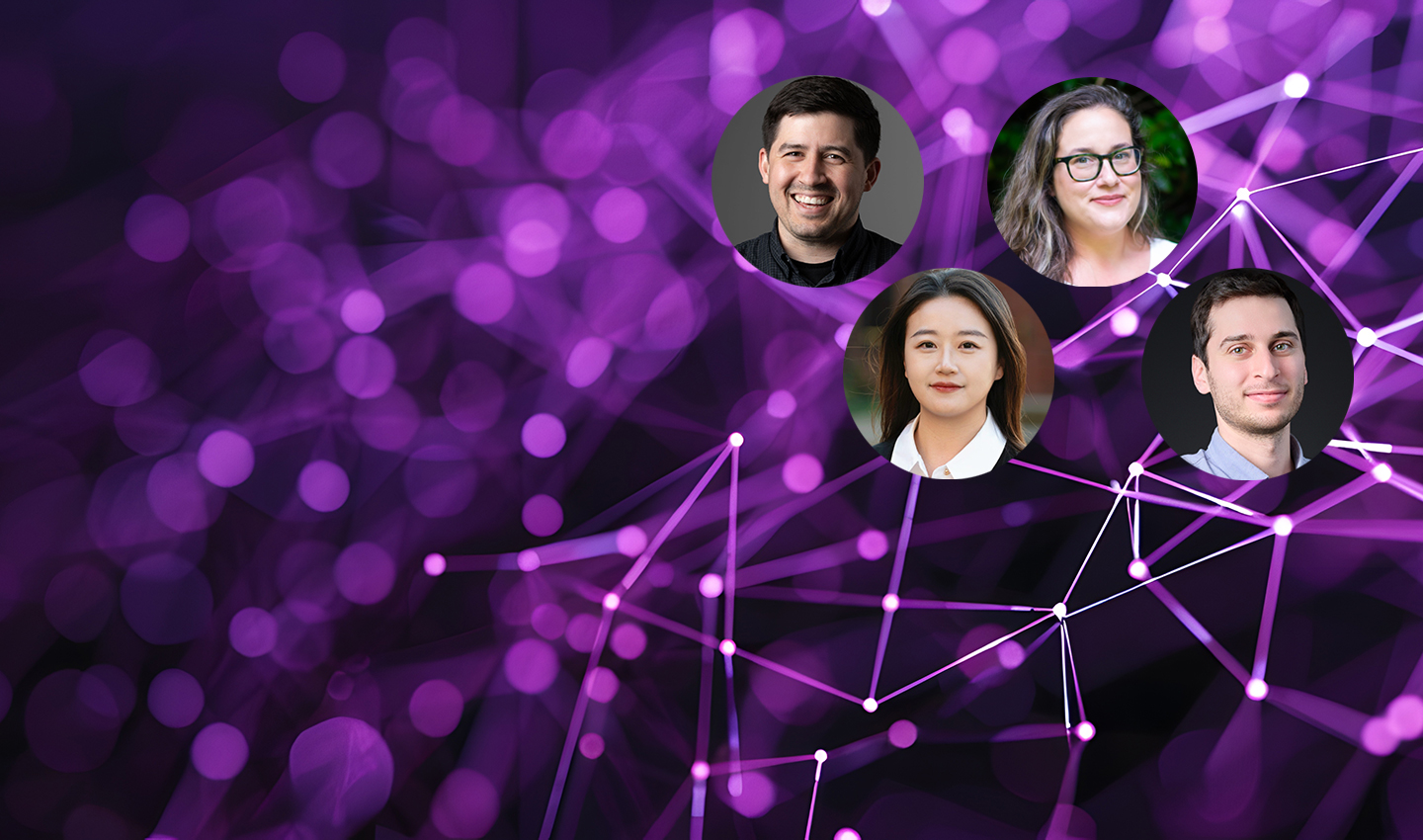
The University of Washington Information School is honored to welcome four faculty members who are joining or taking on new roles in the school. These scholars will inform undergraduate and graduate education in the Informatics, Library and Information Science, Information Management, Museology and Doctoral programs.
The incoming faculty cohort brings expertise and research interests including artificial intelligence, leadership, cataloging, human-computer interaction, knowledge organization and ethics.
“The Information School is committed to solving the world’s biggest information challenges by developing the next generation of information leaders and partnering across disciplines on applied research,” said Dean and Professor Anind K. Dey. “These faculty hires and changes will support and galvanize our ongoing work toward this goal.”
Two scholars are joining the school as tenure-track faculty. Both have expertise in artificial intelligence, deepening the school’s capabilities in emerging technologies. Yaman Yu’s research focuses on AI safety and human-centered security for at-risk users, with a particular emphasis on advancing developmentally safe AI environments for youth. Benjamin Laufer, who joins the school in autumn 2027 after a research stint at Microsoft, studies AI ecosystems and the governance and incentive structures that shape them.
Crystal Yragui and Nicholas Hernandez are both guest faculty members who are moving into permanent teaching-track roles for the Information School. Yragui (MLIS, ‘14) is a cataloger who has held several positions over her 12-year career with UW Libraries. She will teach primarily in the MLIS program, supporting courses in cataloging, taxonomy and academic librarianship. Hernandez (MSIM, ‘19) has long served as guest faculty for the MSIM program. As teaching faculty, he will leverage his professional background in educational technology, management consulting and product management to support classroom and hands-on learning experiences across programs.
“I’m thrilled to welcome these four faculty members to our community,” said Dey. “Our students and partners will benefit greatly from their skills as educators, practitioners, researchers and mentors.”
About our 2026-27 Cohort
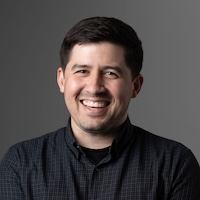
Nicholas Hernandez
Joining the school as an assistant teaching professor in July 2026
Nick Hernandez is a product leader, most recently working in the Education Technology (EdTech) sector. His professional career spans industries and disciplines with a consistent focus on solving information and technology problems at mission-driven organizations. As an educator, Hernandez centers the moral and ethical dimensions of product and technology work, pushing students to ask not only whether a solution meets organizational goals but whether it genuinely benefits the people and communities it touches. He also believes that how teams work together (honoring the capabilities, expertise, and perspectives of peers and community members) is as consequential as what they ultimately build, and he brings this collaborative, values-driven approach into both the classroom and his ongoing consultation and strategic advising for EdTech startups. Hernandez studied Sociology at the University of North Texas before moving to Seattle, where he later earned his Master of Information Management from the UW Information School in 2019.
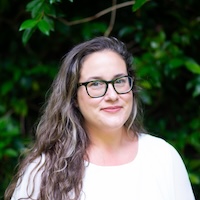
Crystal Yragui
Joining the school as an assistant teaching professor in August 2026
Crystal E. Yragui’s work encompasses socio-political and technical aspects of knowledge organization with focuses on critical cataloging, linked open data, and data modeling. Yragui brings more than 10 years of experience as a cataloger and metadata librarian to her classes and emphasizes hands-on learning. She serves as a co-convener of the Homosaurus Collective’s Implementation Board and co-founded the Orbis Cascade Alliance’s Homosaurus Implementation Project. She co-led the creation of the Program for Cooperative Cataloging (PCC) Entity Management Cooperative Program as co-chair of the PCC Identity Management Advisory Committee. Yragui is part of several leadership efforts to develop and maintain knowledge organization standards, models and technologies. A first-generation college student from a working-class background, Yragui is committed to mentoring students as they launch their careers. Yragui was born and raised in Seattle and holds both a bachelor’s in Comparative Literature & Cinema Studies and an MLIS from the University of Washington.
Yaman Yu
Joining the school as an assistant professor in September 2026
Yaman Yu's research bridges human-computer interaction, security and privacy, and AI to protect and empower at-risk users. She asks how AI and other technical systems can help these users protect themselves, make informed decisions, and maintain their well-being in increasingly complex online environments. Her recent line of work is youth AI safety, examining the developmental risks that emerge when children and teens turn to generative AI for support, learning and connection, and designing safeguards and family-facing tools that respond to them. Yu's work strongly emphasizes empirical and participatory methods, combining system building with design research grounded in real-world use. Yu's work has been recognized by a Google Ph.D. Fellowship, MIT EECS Rising Star and other awards. Yu earned her Ph.D. in the School of Information Sciences at the University of Illinois Urbana-Champaign and her M.S. at Carnegie Mellon University. She holds a B.S. from Tianjin University.
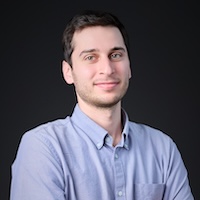
Benjamin Laufer
Joining the school as an assistant professor in autumn 2027
Benjamin Laufer studies AI ecosystems: the networks of interacting actors, models, platforms and institutions that collectively shape contemporary AI. His research uses tools from network science, game theory, statistics, and ethics, law and policy to build models and measurements for understanding these systems and their social implications. His recent work examines how foundation models are adapted and deployed, how risks and failures propagate through technical systems, and how regulation can shape incentives across developers, platforms and users. Prior to joining the UW, he will serve as a senior applied researcher at Microsoft.
Laufer received his B.S.E. from Princeton University in Operations Research and Financial Engineering and his Ph.D. in Information Science at Cornell Tech. During his Ph.D., he was selected for three Rising Stars programs, including Stanford’s Rising Stars in Data Science. He has previously worked as a researcher at Microsoft and as a data scientist at Lime.