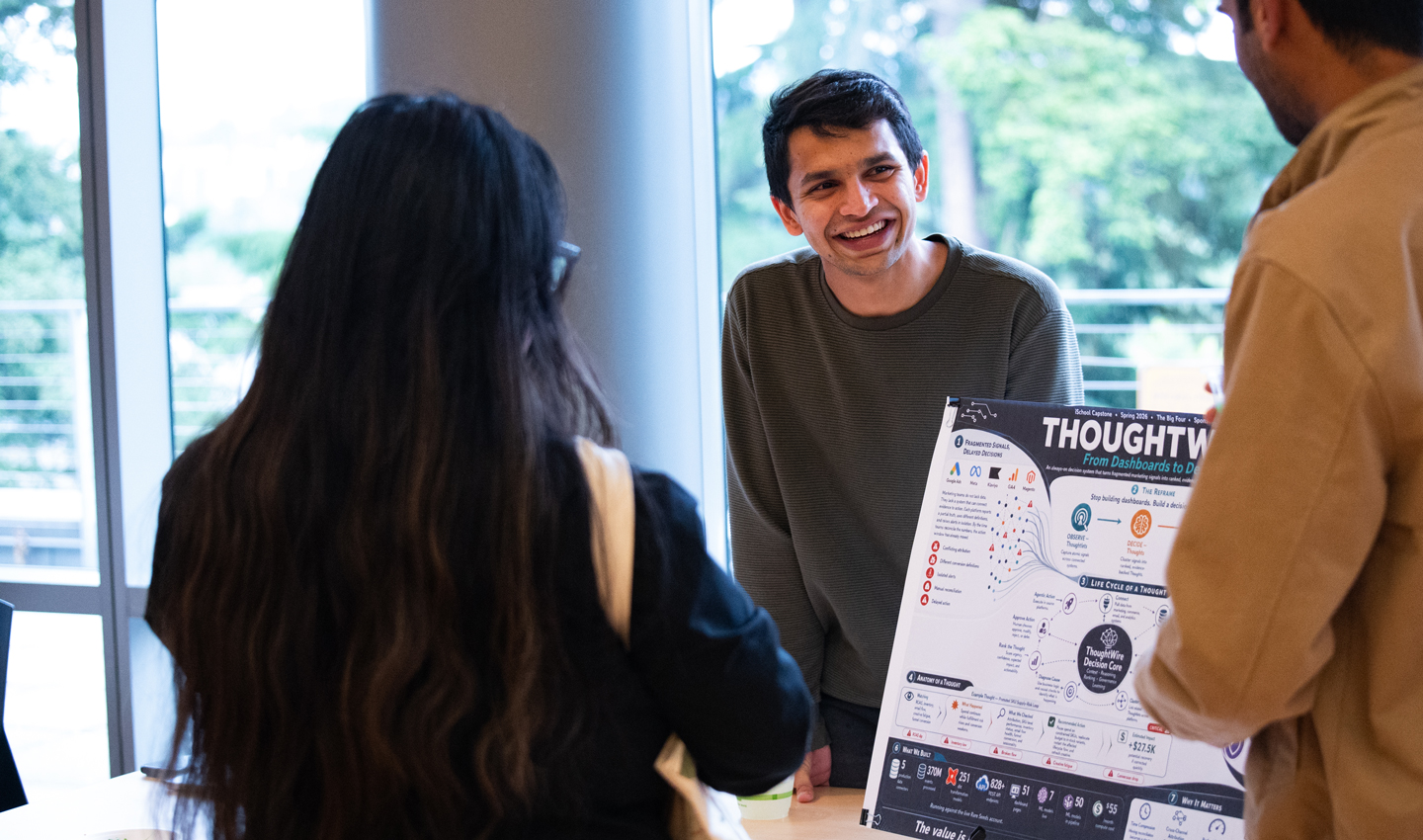
 Students, faculty, staff, project partners, families and friends gathered at the University of Washington HUB ballroom to share Capstone projects, culminating experiences and more at the Information School Showcase on May 28.
Professor and Associate Dean for Academics Amy J. Ko welcomed the crowd of approximately 700 people, including more than 300 students from all five Information School degree programs who presented their work.
“I’m so excited to welcome all of you to this evening of recognition and celebration for our students’ learning and impact,” she said. “I can’t think of a better way to express our values and mission than to recognize all of the ways that our students and our faculty learn and grow and advance discovery in community. Tonight we have Capstone projects, study abroad experiences, service learning, fieldwork, research groups, dissertations, demonstrations, discoveries, and so much more.”
This year’s event was streamlined from prior years, when panels of judges evaluated projects and teams gave talks all over the HUB. This year, two 30-minute rounds of student-led sessions, 54 tables for posters, demonstrations and conversations, and online and hybrid presentations comprised the two-hour event.
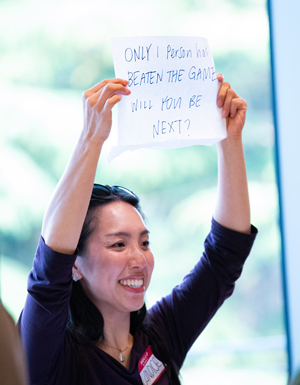 Projects included “Haven: A Centralized Resource Platform for Foster Caregivers;” “Digitizing the Union List of Newspapers for Microfilm;” “Using Community Oral Histories to Preserve Culture and Reduce Bias in Speech Technologies;” “Highlighting Jewish Washington: The WSJHS Mapping Project” and “Designing Structured TV Scheduling for Dementia Care.” Capstone projects included both research-based and practical applications. Students also hone their professional writing and communication skills as they develop their projects.
Spencer Williams, an assistant teaching professor who teaches an INFO 491: Practical Capstone course, has been working with students from the ideation stage to the finished results.
“Their work was terrific,” Williams said of his students, particularly citing Meiyao Li, Kira Brodsky, Thea Klein-Balajee, Lexeigh Kolakowski and Laura Khotemlyansky’s project “Proactive Support with Device Telemetry,” sponsored by Amazon, as well as Simran Gupta’s research. “They incorporated a really interesting technical flavor, with very cool UX work, data science and predictive modeling. A real standout project.”
One Museology project by Liz Organ involved creating an online collection of artistic depictions of dogs throughout history. “[This project is] evident of what I love about museums in general. They are about helping people relate to each other over shared interests and history,” Organ said.
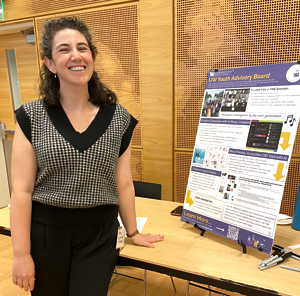
Rotem Landesman, a Ph.D. scholar who works with the Information School’s Center for Digital Youth, presented a project on the Youth Advisory Board (YAB), with a concept of “research reimagined by the next generation.” A typical YAB session includes topic immersion in a key issue, opportunities to share thoughts, ideas and responses, and the creation of a prototype, according to their poster. Testing AI music applications and brainstorming ethical guidelines on future AI music use and development was one recent project that several students noted they enjoyed.
Landesman, who said she takes a “summer camp counselor” approach at times to working with the enthusiastic teens, said she appreciates the new ideas the younger generation brings. Teens on the board said they were excited to be challenged in ways that were different from what they experienced at school, and that increased their leadership skills.
“It has been a really thought-provoking experience,” said Nada Abdelreheem, a YAB member. I’m constantly thinking about things that I would never get to think about if I weren’t asked all of these questions. ‘What do you think about design?’ It’s taught me to be more critical, like whenever I look at a user interface. I wasn’t like that before. I’m really grateful.” The YAB research will continue under the guidance of Landesman’s Ph.D. advisors Ko and Katie Davis, as Landesman heads to a new role as a postdoctoral researcher at the Harvard Child-Centered AI Lab in the fall.
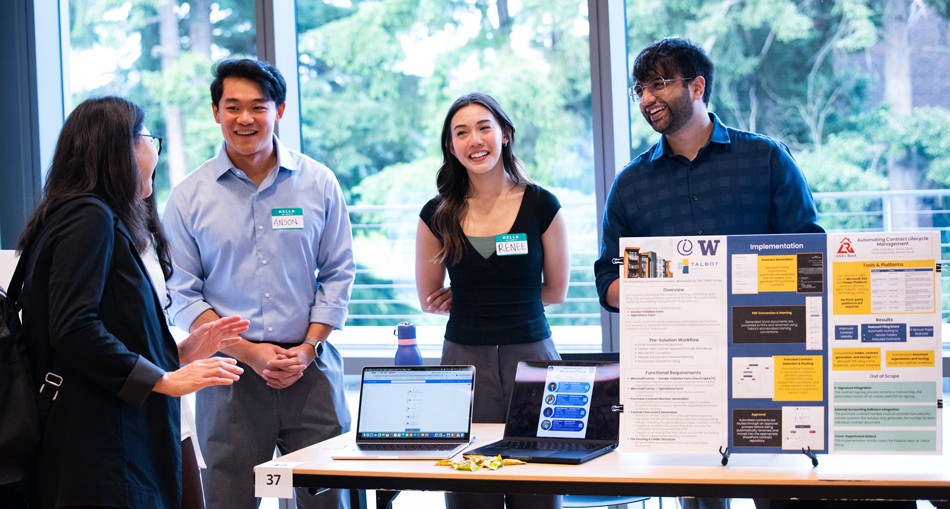
Other projects brought a student perspective to problem-solving. Information School Career Services staff worked with students on an advisor intelligence platform for proactive student support. Informatics students Jackie Beng, Simran Gupta, Spandana Kannam, Bouba Katompa and Pushkar Rimmalapudil presented their findings, which included tools for identifying students who might need more support and encouragement to reach key milestones in their academic careers.
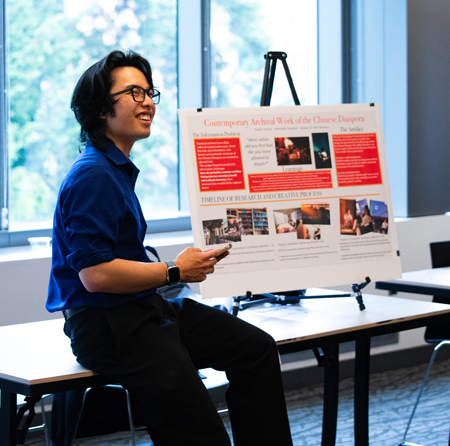
Students like Leo Fan benefited from mentorship by iSchool faculty. Fan’s project centers on generations of Chinese people and the differences in options, responsibilities and free time between young people today and their parents. For Fan, working with Assistant Professor Temi Odumosu was a highlight. “I’m so thankful to have had Doctor O for my advisor,” he said. “She’s super keen, and she challenged and pushed me in the ways that I wanted. Working with her has been exceptional.” Fan had the opportunity to present his project at the Wing Luke Museum and to make a short film that takes a poetic approach to comparing his own life with his mother’s when she was the same age.
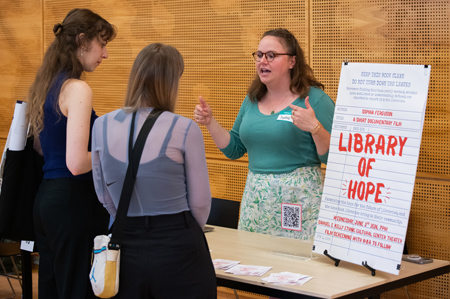
MLIS student Sophia Ferguson also created a short film as part of her project — in her case, a documentary called “Library of Hope” about the future of libraries and the hope that libraries bring to their communities. The film will screen on Wednesday, June 3, on campus.
The project “Beyond Capture: Designing Utility-Driven Camera Experiences for Google Pixel,” led by MSIM students Anushka Bhagchandani, Aswathy Udhay Kumar, Jenna Klein and Yiting Wang, designed a camera feature that offers suggested tasks based on the information included in “utility” photos, such as shots of an event graphic. Using the feature, which the team tested in a series of 12 sessions in an iterative process, users can quickly and seamlessly add events to their calendars and maps within the Google suite of products and then reduce the clutter of files they are storing. The team's design sprint resulted in a hybrid product that combined the best elements of both versions they tested.
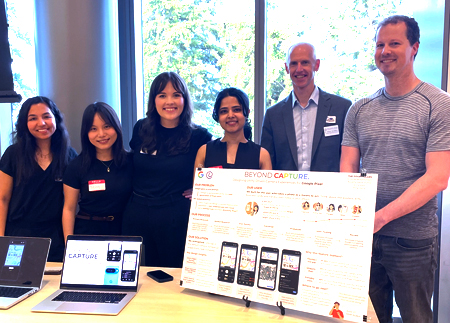
Alex King, who is a product manager on the Pixel camera team at Google, sponsored the project. “I intentionally wanted to leave it open-ended to mimic the real world, where there’s not always a clear answer,” he said. “I was really impressed with their ability to navigate all of that ambiguity, keep an open mindset, and explore new ideas. To see all four of them go through that process, defining the problem, coming up with a bunch of different ideas, narrowing things down and then really polishing and testing it. I think the quality of the work has been really cool.”
“It was a lot of fun, going through the entire process and building something that people actually come up to us and tell us it’s useful,” Udhay Kumar said.
In their closing remarks, Victor Aque, iSchool academic operations manager, announced the winners of the three audience choice awards — the Spark Award for Creativity, the Bridge-Builder Award for Equity and the Visionary Lens Award for Insightfulness — with numerous projects earning enough nominations to win each. The night concluded with applause, carafes emptied of lemonade and tea, new connections formed, and students ready for Convocation and the end of spring quarter.