iSchool Research Symposium: Devan Donaldson on Trustworthy Information: Building Bridges Across Archives, Biomedical Informatics, & AI
 The iSchool Research Symposium continues this fall, bringing together researchers from across the iSchool and beyond to share new work, spark conversation, and connect our community with the wider world of information research.
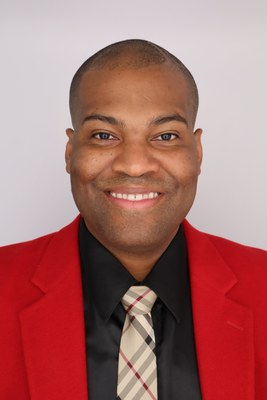
Our guest on October 16 is Devan Ray Donaldson, Associate Professor at Indiana University Bloomington's Luddy School of Informatics, Computing, and Engineering, where he directs the Archives and Records Management and DC3 specializations. Donaldson studies what makes information trustworthy enough to preserve, reuse, and act on. His work spans the quality of electronic health record data reused for research, the long-term stewardship of AI training data and models, and community-engaged archival practice. His talk considers what we gain by carrying ideas across disciplinary boundaries, and what we shouldn't assume will travel.
Trustworthy Information: Building Bridges Across Archives, Biomedical Informatics, and Artificial Intelligence
What makes information trustworthy enough for us to preserve it, reuse it, or make decisions based on it? That question has followed me throughout my career, even as the kinds of information I study have changed. My starting point is a deceptively simple archival insight: having information is not the same as understanding it. We also need to know where it came from, how it was created, what has happened to it since, and whether it can support the use we now want to make of it. In biomedical informatics, these questions led me to study the quality of electronic health record data reused for research and to develop methods for identifying patient records that may warrant closer examination before analysis. In my work on artificial intelligence, I ask what happens to training data, model weights, evaluation logs, and other information objects once AI systems are developed or retired, and what librarians and archivists would need to know to steward them responsibly. My community-engaged archival research approaches the question from another direction: what happens when the records we preserve cannot be understood without the knowledge of the communities that created them? Together, these projects have led me to see my research as a continuing investigation of trust, context, quality, and stewardship. I use the talk to consider what information science can contribute when the same fundamental problems appear in different disciplinary settings, and what we can learn by carrying ideas across those boundaries without assuming they will work the same way everywhere.
Refreshments provided. Come early, grab a snack, and settle in.