iSchool Capstone

2020

Project Logo

Millennials Interactions with FinTech & the Impact on Their Finances

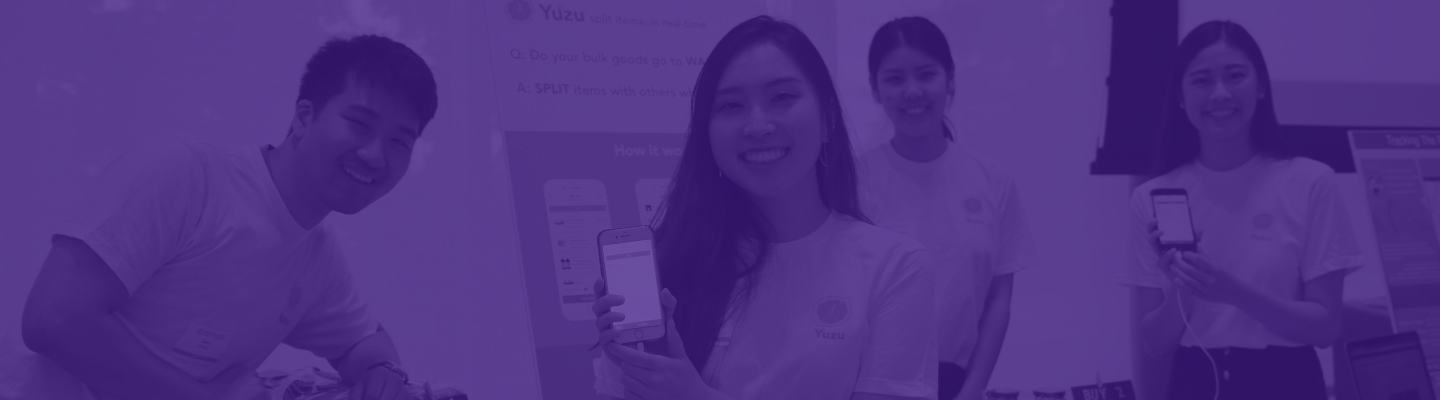
The motivation for undertaking this study was twofold: I wanted to determine millennials' utilization of FinTech apps, and if this has any impact on their financial literacy. Therefore, I analyzed academic and industry literature around millennials and FinTech usage trends, analyzed publicly available Venmo transactions to assess financial literacy, and performed user research on millennials to gain a deeper understanding of their views on FinTech apps and their perceptions of financial literacy. Ultimately, I determined that while millennials use FinTech very frequently, it doesn’t impact their financial literacy and that FinTech apps solidify existing financial habits instead of changing them.

Project Logo

Project Detox

Among gamers playing the top 15 games, roughly 70% have experienced online abuse. Project Detox is empowering the Gaming Safety team at Microsoft so that they can provide a safe environment to their customers worldwide. We are implementing an automated testing framework for their toxicity classifiers. After measuring model performances against each other and on different kinds of data, we have generated beautiful and intuitive reports which would enable the stakeholders to make data-driven decisions. All of this has been packaged into pipelines which would automate the process and eliminate manual work.

2019

Project Logo

Agency & Ethics: A Web Archiving Toolkit

An evolving web makes sustained access to content of stakeholder stories a unique challenge—riddled with ethical questions. Montana State University (MSU) Library was ready to launch a web archiving initiative with limited capacity for background research and workflow development. The goal of this project was to support preservation of web content related to collection development policies and institutional output. Resources within this toolkit seek to center the agency of content creators; aid in diversifying collections; and serve as a model for other institutions.
Project Logo

Mental Health Advocacy for Students in Academic Libraries

This study investigates how academic libraries can advocate for students experiencing mental health obstacles while promoting academic success. Student mental health distress may stem from a diagnosis, academic stress, unmet basic needs, or life circumstances. We explore what barriers staff encounter in these scenarios, and how academic libraries can build upon existing resources and practices to offer increased support for students’ well-being. Based on our research and interviews with academic library staff, we have developed a set of best practices that can be used by academic libraries to better advocate for and support higher education students experiencing mental health hardships.
Project Logo

Project Gravity

Electronic health records (EHR) systems are frustrating to use and suffer from a lack of information sharing. This is due to the absence of a standardized record transmission protocol, which impacts doctors and patients alike. Unfortunately, patients have no input about the technology that stores and shares their sensitive health information. Project Gravity aims to remedy this by giving patients, along with healthcare professionals, a voice in a centralized forum. Together we can positively shape the future of our medical records.
Project Logo

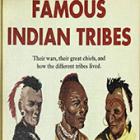
Shifting Perspectives: Presenting Problematic Depictions of Native Americans

Special Collections currently houses a large donated collection of Historical Children’s Literature that focuses on Indigenous people, approximately 1500 books. Our project centers on how Natives Americans were depicted between the 1930s and 1970s, how their portrayal has changed over time, and what we as information professionals can do to present this data accurately and responsibly in the current day. We approached this by splitting the scope between public libraries, where possible, and academic libraries/special collections, as each of us has different interests and goals but a common purpose of making these historical materials available.

2018

Project Logo

An Analysis of Restricting Library Materials in Prison

This project delivers research with an emphasis on the restriction of prison reading materials and the various implications that poses on intellectual freedom as well as the safety and security of these practices. Through comprehensive analysis of data, policy, and methodology of published works, it became possible to conduct surveys of institutional library professionals to seek raw data to better understand the process and impact of restrictions of library materials. Data supports that intellectual freedom is hindered and that the process of restriction posses an ethical quandary.
Project Logo

Books Behind Bars

What does library access look like for incarcerated youth? There have been few studies on this subject. What we do know is that there is no legal entitlement to library resources for detained youth. This means incarcerated youth have no right to independent legal information, independent sexual health information and even recreational materials. Because Juvenile Justice Systems differ from state to state, the best way to access this information gap is to look at each state individually. The State of Utah served as a pilot study to find the best way to research this area of library science.
Project Logo

Idaho Talking Book Service State Initiative

We worked with the Idaho Library Association (ILA) and EveryLibrary to spearhead a grassroots advocacy campaign asking the Idaho Legislature to provide state funding for the Talking Book Service, which gives people with disabilities and vision impairments the opportunity to continue reading. We created an online petition and email campaign, secured the support of key stakeholders, and marketed the campaign via email, phone, and social media. Our efforts helped secure one-time state funding of $200,000 for the Talking Book Service and energized a community of civic-minded Idahoans who support the Talking Book Service and Idaho libraries.
Project Logo

Making Sense of Misinformation At Scale

Fact-checking organizations have limited resources to keep up with misinformation in this viral age. Prioritization of information allows for more efficient and accurate topic selection. We discuss an implementation of an automated NLP topic-modeling system at Snopes.com, a data pipeline to crowdsource misinformation. Users submit reports through a website and HTML is scraped and parsed into clusters for the Snopes.com reporting staff to act on. Topic modeling provides metrics for prioritization and effective allocation of resources. Our data pipeline reduces the amount of manual curation required by editors at Snopes, which enables them to reallocate their resources to debunking rumors.