iSchool Capstone

2024

Project Logo

Building a Trauma-Informed Workplace to Support Library Staff

Our capstone project works to address the issue of unaddressed public library staff trauma through a paper and website. These texts overview public library workers’ experience of trauma, defines trauma-informed care, examines its use within the public library setting, and provides strategies to incorporate those principles for public library staff support. Our project serves to educate library staff and the public about the experiences of library workers and as a call to action to incorporate trauma-informed practices into library staff support so that library staff wellbeing is prioritized.
Project Logo

Care and Community Toward Climate Disaster Resilience

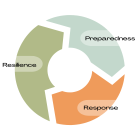
This project evaluated Marshall County Public Library’s response to the December 2021 tornado in Western Kentucky. The primary deliverable was a revised tornado response plan for use at the library. Secondary deliverables included a crisis response taxonomy suggestion for the Marshall County Public library website, and a general framework for consideration in climate disaster planning. The Cycle of Disaster Planning and trauma-informed solutions presented here are a synthesis of information gathered about Marshall County Public Library, as well as current disaster management literature.
Project Logo

Digital Archive Enhancement Project: Streamlining Document Management for UW Farm

The “Digital Archive Enhancement Project" addresses inefficiencies in document management and accessibility. Focusing on importing Weekly Dirt newsletters from MailChimp to the UW Farm website and migrating files from Google Drive to OneDrive, the project aims to enhance data organization and archival processes. Results include the successful establishment of a stable link for the Weekly Dirt newsletters, improved accessibility for historical documents, and streamlined document management procedures. By facilitating easier access to valuable historical resources, the project makes a significant difference in the lives of UW Farm stakeholders, researchers, and the wider community, fostering increased engagement and knowledge dissemination.
Project Logo

Digital Crisis Librarianship: field notes from the front line

The impacts of accelerating technological and social change influence all aspects of present life. New professional disciplines have emerged over the past decade addressing online-offline crises at the intersection of digital information and social conflict & violence. This project is a field report elaborating a unique professional role drawn from my personal professional experiences and library and information science skills. Digital crisis librarianship helps people and organizations find and make sense of information about extreme and harmful subjects in a fractured and adversarial information environment. Digital crisis librarians provide information services for researchers, policy-makers, trust & safety professionals, and more.
Project Logo

How To Train Your Chatbot

With the continuing rise of Artificial Intelligence, young students are especially vulnerable to misconceptions and misuse of AI. Many teachers are also unfamiliar with the new technology. How To Train You Chatbot is an online learning platform that introduces AI to middle school students. The website modules explain prompt engineering, fact-checking, and the ethical implications of interacting with AI. By using this platform, teachers can encourage critical thinking, prevent academic misconduct, and help students use platforms like ChatGPT to enhance their learning. As AI continues to evolve, our platform empowers students to build a mindful relationship with artificial intelligence.
Project Logo

PII Safeguard - A PII Discovery/Redaction Browser Extension Tool

PII Safeguard is a Chrome browser extension tool designed to enhance data security by discovering, identifying, and redacting personally identifiable information (PII) across different files to protect sensitive information. By using a prototype designed in Figma that outlines the tool’s user interface and user interaction workflows, and leveraging a backend that's built with Python, the browser extension scans inputted files to detect over 40 different categories including financial, personal, and security entities. This software tool aids users in managing and securing sensitive PII, ensuring compliance with privacy standards and reducing the potential risk of data breaches.

2023

Project Logo

An Information Literacy Moveable Feast: Personal Data Privacy Literacy

This OER program design will consist of information literacy workshops that can be used to supplement US undergraduate core curricula, as well as provide academic librarians with teaching opportunities. They can be offered at any institution using the materials provided by the program to seamlessly fit within a variety of core curricula. The first workshop addresses the problem of personal data privacy literacy awareness amongst college students, providing them with foundational knowledge of the personal data privacy landscape. The project will make a difference in students’ day-to-day lives as they manage and navigate their own personal data privacy literacy journeys.
Project Logo

Automatic Privacy Notice Checker

Washington State Department of Licensing (DOL) currently evaluates the privacy notices of their data recipients who collect information about state residents for business purposes manually. This process is time-intensive, inconsistent, and prone to human error. Our team developed an Automated Privacy Notice Checker (APNC) tool to address these concerns. APNC assesses these privacy notices based on defined baseline requirements and highlights the non-compliant areas by these data recipients as per the DOL standards. Our solution makes the entire process more consistent, quick and data-driven. With improved efficiency, our tool empowers the DOL in securing the data of Washington State Residents.
Project Logo

Data Forensics

Our project, Data Forensics, is part of our sponsor’s larger Data Afterlives project. The NSF asks researchers to make federally funded data available. We researched NSF awards to see if we could find data associated with these projects. Our findings demonstrate the challenges in finding data and how the accessibility of data varies depending on the NSF research area. We discuss the steps that we took in the course of our research, as well as why this research matters, particularly to information professionals and how national policy shapes the future of open research. We offer future avenues of research.
Project Logo

How to Find the Right Capstone Sponsor: A Guide on Maintaining Sponsor Relationships and Communications (for the iSchool)

The information problem I addressed with my project was the difficulties surrounding UW students’ abilities to find a sponsor and maintain relationships with them throughout their Capstone. To solve the issue, I created a student-written Sponsor Handbook, which navigates students through the process of finding a sponsor, interviewing them, maintaining communication, and utilizing conflict resolution techniques in the event the relationship deteriorates. As a result, students now have a resource that expands on the iSchool’s current Capstone resources regarding sponsor relations. This project will give students more confidence while searching for a sponsor and ease their anxieties about Capstone.