iSchool Capstone

2021

Project Logo

Building a Better Safety Net

Sno-isle Libraries, which serves Snohomish and Island counties in Washington state, has seen a dramatic increase in the number of patrons who are struggling with homelessness due to the Covid-19 pandemic. To address the needs of this vulnerable population, I have compiled a community asset map by identifying local nonprofits, government agencies, shelters, McKinney-Vento Liaisons, social workers, and public schools that work with individuals and families struggling with homelessness. This document will be distributed to all managers and librarians within the Sno-isle Libraries system and will be used for future outreach to create a stronger, better social safety net.
Project Logo

Data Privacy Assessment for Washington State DOL

Unlike most major tech companies and public institutions, DOL does not have a standard privacy or data maturity assessment form for program-level use. DOL has studied models from cities like Seattle and commercial enterprises but found that none of the existing models fit their needs. The final deliverable of our project is the survey tool designed for review and adoption by Washington DOL. The survey tool will act as a preliminary check for current data governance practices at DOL, help DOL reinvent data privacy and stewardship standards, and serve as a foundation for WA DOL's future Privacy Impact Assessments.
Project Logo

Mapping COVID-Related School Operations in the US

Students and parents had to make challenging decisions regarding education during the COVID-19 pandemic. School districts across the US implemented varied school operation plans and the federal government did not create a centralized source for operational statuses at the national level. Data at the state level differs greatly in availability, verbiage, and format. This project aggregates and tracks district-level school operational statuses state-by-state, as well as school-related COVID-19 cases. It accounts for 6,800 out of 10,000 US school districts across 33 states. With this data, K-12 parents and children have a tool to make informed decisions regarding education and health.
Project Logo

Public Library Resources for Conscious Tech Use

My Capstone Project was concerned with information literacy among public library users, and produced educational and informational resources. These resources consisted of two public programs concerning the ways in which people navigate and share information online. The first provided an online security overview, focusing on how cookies and personal data are used by websites and social media, along with tools to protect their privacy. The second covered digital minimalism, helping attendees find and discuss ways to achieve a healthier balance in their online activities. Both programs were well received and have resulted in patrons taking control of their online behavior.
Project Logo

Race and Ethnicity Classification in Health Datasets

Similar race and ethnicity classifications are needed to identify health disparities between different groups. There are 3 broad categories of race and ethnicity classifications - surveys using versions of the OMB 1977 standards, using versions of the OMB 1997 standards, and datasets with non-standard classifications. Even datasets that use an expanded version of the OMB 1997 standards (with specific ethnicities) exclude some identities. Using specific ethnicities that people identify as results in fewer blank and “Other” responses for race and ethnicity questions. A more inclusive and consistent collection of race/ethnicity data would support research to address health disparities.
Project Logo

The Euphorigen Investigation

Misinformation is a pressing global issue; it is increasingly easy to post false or misleading information on the internet and reach massive audiences. Alongside the Center for an Informed Public, Puzzle Break, and The Technology & Social Change Group (TASCHA), we created an online escape room to mimic the psychological and emotional responses elicited by real-life interactions with digital misinformation. The escape room aims to equip players with the necessary skills to identify misinformation online and become savvy, skeptical digital citizens.
Project Logo

The Word Hunt: Problematic Language in the Finding Aid

UCSC’s Special Collections needed to discover the prevalence and nature of outdated and problematic language within hundreds of finding aids that archivists have created. After conducting research and composing a literature review, I performed an extensive audit of the finding aids that included in-depth reviews of individual aids as well as keyword searching through the entire collection of finding aids. The changes that will result from this project will decrease the marginalization of subjects contained within the records while simultaneously allowing users of the finding aids to engage with a more inclusive discourse for resource description and access.
Project Logo

Updating SPARC's Author Rights Resources

SPARC’s Author Addendum is a legal instrument that allows authors to modify a publisher’s copyright transfer agreement and keep key rights to their work, including the possibility of making it open access and widely available. For this project, I revised and edited SPARC’s accompanying explanatory literature about the Author Addendum and helped create four new deliverables for the information suitable for today’s information environment. At the conclusion of this project, authors who want to maintain their right to share their work widely and openly will have an updated resource for understanding the basics of copyright and open access.

2020

Project Logo

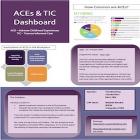
ACEs and TIC Dashboard

One cause of PTSD is childhood trauma. Ten questions have been developed to measure ACES. High ACES scores are linked to negative mental and physical health which adversely affect work performance. Transforming Connections requested a system to analyze the ACES score for organizations using the ACES survey. Our system consists of distributing the survey through Survey Gizmo and analyzing the data with Tableau. The sponsor utilizes the Tableau dashboard to provide their client with a report consisting of: the company’s environment compared to the national average, areas for improvement and customized action for an improved work environment.
Project Logo

ElectionGuard

ElectionGuard is an open-source solution not intended to be administrated by Microsoft but instead empowers organizations and voters. The ElectionGuard toolkit can be used in new and old voting systems alike and enables voters to check on their own if all votes that were cast are valid and accurately tallied. Being open-source, it does not compromise security or secrecy and does not rely on one particular software. How this solution works is a voter casts a ballot and is presented with a tracking code. At home, they can use said code to verify online that their vote was counted.