iSchool Capstone

2017

Project Logo

Serving International Students at UW Libraries

I teamed up with the UW Libraries Teaching and Learning Group International Student/ELL Subcommittee to continue an investigation done by a capstone group in 2016. While the previous year’s project focused on reaching out to international students about their concerns, I reached out to the librarians and library staff at UW to see how conscious they are of the needs of the international student population and how they address those challenges. Through the course of the project I also gathered more information about what programs our international students are coming from in order to better inform staff and future training.
Project Logo

We Can’t Serve Who We Can’t See

The City of Seattle's Demographic Disaggregation Task Force (DDTF) is a cross-departmental group charged by City Council to change the way the City collects race/ethnicity data. With this more accurate information, City services can be targeted more equitably. Our project is a pilot of demographic disaggregation at the Utilities Discount Program (UDP), which provides discounted electric utility rates for low-income households. Through organizational research, observations of staff, and interviews with key UDP players, we came to understand the current practices around race/ethnicity data. From here, we made recommendations on how to integrate the disaggregated race/ethnicity data practices into UDP's framework.

2016

Project Logo

A Hoppy Loan & Digitization Agreement

Since 2013 the Oregon Hops and Brewing Archives (OHBA) has been dedicated to collecting and archiving materials related to hops and brewing in Oregon. Currently, OHBA lacks a formal Loan & Digitization agreement form that addresses intricate copyright issues, and is concise and understandable for OHBA and Special Collections and Archives Research Center (SCARC) donors. To address this problem we researched the practices of similar institutions and copyright issues, created multiple form drafts, a supplemental LibGuide, and conducted a usability survey. The end product of our capstone project is a Loan & Digitization form that is organized, offers room for thorough description, contains copyright information and protects the OHBA and donors from potential donation problems. The addition of a LibGuide keeps the form concise while still providing users with supplemental information that will save the OHBA time and work in the future. The final form will be adopted by OHBA and SCARC.
Project Logo

Analyzing the Legal Field of Security and Privacy

An ever increasing amount of data collection on social media contributes to additional security implications which are not outlined in the End User License Agreements that we see today. We believe that this data can be used in many ways to violate user anonymity and create digital profiles of users based on various data processing methods. We can then cross-reference these digital profiles to other social media platforms to identify previously anonymous users. To do this, we hope to use numerated social media APIs which contribute to the release of Personally Identifiable Information. From this, We hope to educate users on End User License Agreements while informing them on applications of data usage by performing analysis on Reddit user data and other social media platforms.
Project Logo

Astronomy and Physics Collection Policy Update

Collection development policies guide the evolution of library collections while considering the needs of the populations served. The existing University of Washington Libraries’ subject policies for astronomy and physics were last updated in 1986 and never ratified. The procedures outlined therein are woefully out of date and, in particular, have nothing to say about electronic resources, which are cornerstones of modern academic work. In order to bring these policies into the 21st Century, our group examined existing collection policies at the University of Washington, interviewed the astronomy and physics collections’ users, and studied astronomy and physics policies from comparable institutions. The resulting documents, including a formal policy statement and a public-facing LibGuide, will direct collection acquisitions, maintenance, and evaluation in these fields for years to come while providing the flexibility to adapt to the fast-paced environment of research science.
Project Logo

Building Community: The Social Justice and Libraries Open Conference

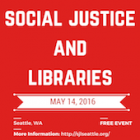
The first annual Social Justice and Libraries Open Conference was created to support library workers and students in theorizing, strategizing, and operationalizing ways for libraries to empower people and ideas. In response to the growing community of online social justice and critical community, this conference supports local efforts to build community around issues of inclusion, activism and information access. More than 100 attendees from the Pacific Northwest region, California, and British Columbia came together for a day­long event that included keynote speeches by educator Wayne Au and artist/community activist C. Davida Ingram. Discussion sessions on audience ­generated topics included serving homeless and LGBTQ patrons, supporting community activism through libraries, and diversity in the LIS field. Using feedback from participants, we have collectively created a framework for future social justice conferences to take place, creating spaces for local community to form around equity and justice in libraries.
Project Logo

Data Archeology and Human Rights: Documenting the Data of El Salvador’s Civil War

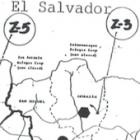
From 1979 to 1992, El Salvador was engulfed in a bloody, political civil war, with over 75,000 civilian casualties. In the early 1990s, several NGOs and a UN Truth Commission began systematically documenting human rights atrocities perpetrated during the war, using personal testimonies, military records, and other documents. Each database was designed differently, utilizing the technologies available at the time. These files changed hands multiple times over the next 25 years, with limited accompanying documentation; information about metadata values has long been lost. Working with the UW Center for Human Rights and the Human Rights Data Analysis Group, our team developed a data management plan and an initial data dictionary for one database. Researchers ultimately hope to examine, standardize, and map fields across databases, providing a fuller picture of the human rights violations committed and supporting the efforts of surviving family members, scholars, and legal teams for truth and accountability.
Project Logo

Robot Operator License

Following the path of Moore’s Law, teleoperated robots are becoming more accessible and ubiquitous in the everyday consumers life -- forever changing the way we work and interact with the world around us. In order to maintain public safety in a society cohabited by humans and machines, the Robot Operator License ensures that users have completed training and received a license to operate their robot. This educational course provides critical information and interactive simulations in an effort to smoothly transition this technology into the modern world. Developed in partnership with the University of Washington Human-Centered Robotics Lab, the Robot Operator License is designed for the Beam+ telepresence robot, which serves as a proof-of­-concept and demonstrates a need for this type of operational education. Our course aims to tackle the policy challenges and threats to public safety due to the use of teleoperated robots by the everyday individual.
Project Logo

Snahul stsobojib sp’ijilal sjol yo’tan jlumaltic (Tseltal House of Wisdom) - Community Engagement Programming

Imagine working with a community that has no word in their language for library. The Tseltal Mayan people in Chiapas, Mexico have recognized the benefits and necessity of a community knowledge house. Currently, potential materials are stored across 600-square-miles and need to be collected in a central location and organized. More than an archive, this location is meant to be a community center where Tseltal cultural materials can be accessed and shared. In conjunction with the One Equal Heart Foundation, our team designed recommendations for increasing access and collection development in order to support the community’s cultural and linguistic preservation. The delivered manual of recommendations includes examples of indigenous and Latin American libraries to inspire community leaders as they envision the future of their knowledge house.