iSchool Capstone

2021

Project Logo

Full S.T.E.A.M. Ahead!

Full STEAM Ahead! was a virtual STEAM camp designed for children 6-12 that ran between April 5-9. Everett Public Library (EPL) originally had a STEM program for ages 0-3 that was taken over by the local school district. Our team saw the opportunity to fill a gap in programming, especially since engaging ages 6-12 is vital for maintaining interest in STEAM. We developed five 1-1.5 hour activity sessions. Our program had an average compared to the attendance of similar programs EPL offered during April 2021. Our attendees were very engaged and had an overall positive response to our program.
Project Logo

Is that 'loopy' or 'floppy'? Join Strawberry the Harbor Seal to learn about the impacts of marine debris and contribute to marine science research

Learning science is hard: active learning in science class is rare. Few parents are confident teaching their kids at home, and there are minimal opportunities for kids to engage in the science community. Marine Rescue provides a fun way for kids to learn about marine animals and debris through interactive stories and minigames. Players learn research vocabulary and practice contributing to citizen science by classifying real marine debris photos from Washington beaches. Our content was developed following child-centered design and in collaboration with COASST researchers. Marine Rescue has been well-received and is an effective platform for kids to learn science at home.
Project Logo

KidsTeam Rural Libraries

KidsTeam Rural took up the challenge of developing a Participatory Design (PD) infrastructure in a COVID-era, remote-only environment for two rural libraries. Working with a team of LIS students and librarians, KidsTeam Rural supported Colfax Library (Whitman County,WA) in transitioning an in-person Lego Mindstorms PD project to Zoom. For Chewelah Library (Stevens County, WA), we designed an asynchronous, analog-only design infrastructure to get kids’ co-designing their library space. The two projects enable youth in these communities to connect with librarians and contribute to their libraries in meaningful ways.
Project Logo

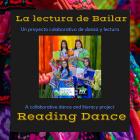
La Lectura de Bailar - Reading Dance

This is a collaborative project between the Mount Vernon City Library and the Mount Vernon High School Mariachi Program to provide Folklórico (Mexican Folk) dance instruction and create a community literacy campaign. The central focus of this project is to engage with teens and Latinos who are currently underserved by the library and connect them to the library through outreach and innovative programming. This project promotes library resources to teens and within the school community and reinforces the school district's mission to be facilitators of lifelong learning by connecting students to the public library.
Project Logo

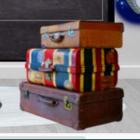
Luggage for Learning: Standards-Based Resources for Elementary Classrooms

First-grade teachers at Glenridge Elementary School in Kent, Washington, were not given resources or curriculum to teach their social studies units. This led to stressful workloads for teachers and differing instruction for students. We surveyed teachers to determine their current practices and needs and researched the learning standards. We then found engaging, equitable, and standards-based open-access resources to create curriculum units encompassed into learning kits. These kits will help teachers plan their units and provide similar resources and talking points to make instruction equitable for students. Students will also see themselves in their learning.
Project Logo

Promoting Database Resources for Digital Learning in Elementary Schools

Schools have access to databases through public libraries, but students and teachers utilize few of them. Our project raised awareness of two databases that third grade dual language teachers and students were not already using: World Book Online Kids and Britannica Library Children. Our curriculum map showed teachers which features and articles align with their science curriculum and standards, while a video compared and contrasted the two, making it easier for teachers to add these resources into corresponding lessons. A video tutorial for students showed them how to access Britannica so they could use it independently.
Project Logo

Public Library Programming in the Pandemic: Returning to Normal or Shaping a New Normal?

The pandemic affected almost every part of our lives, especially social services that were delivered in person. We conducted a longitudinal research study interviewing 20 Washington State public librarians during the pandemic and tracked how their programming shifted throughout the year. We found three main themes that surfaced in our data – job satisfaction, changes to programming, and rethinking the profession once the world is "back to normal." We plan to ultimately disseminate our findings in a published paper to help librarians learn successful programming options to meet the needs of their communities.
Project Logo

Teen Meme Privacy Project

The Teen Meme Privacy Project set out to address particular ways in which privacy and surveillance impact youth, complicated by intersections of their sociopolitical identities. We committed to acknowledge the reality of systems of power in their lives – such as white supremacy, capitalism, and heteropatriarchy. By honestly and unequivocally engaging these within the context of their lived experiences, we worked with our Teen Advisory Board to create relevant, authentic, and impactful shareable material, and fill the need for a robust set of privacy resources made just for teens, on topics they care about, in language and formats they use.
Project Logo

The Lambert House Library Project

This project’s primary aim was to build the electronic infrastructure to catalog what is available in the Lambert House Library so that we can expand services offered to young adults. Over the course of the year, we established a new catalog system, input the collection into the new software, cleared out damaged or out-of-date material, and configured an easy-to-use circulation system. With the completion of this project, patrons of Lambert House can finally locate material and check books out, while staff can assess what books are popular among the collection and where there is room for expansion.
Project Logo

The More We Get Together: Improving Interactivity and Community Building in Online Live Storytimes

Children's librarians moved storytime online at the start of the COVID-19 pandemic without knowledge of what works in that format. The project sponsor, Claire Scott, began weekly community storytimes and struggled with replicating the interactivity and community building present in-person. Through observation, research, surveys, and trial, I tested various new elements with Claire's storytime audience. I found that platform matters; freeze dances, scavenger hunts, and getting off mute helps with interactivity; and I created a Facebook group for the adults to connect with one another. I also created a one-page guide for other librarians to use in their storytimes.