iSchool Capstone

2022

Project Logo

Read-a-Rama: Building Programming Foundations

As a part of Read-a-Rama’s efforts to grow, our team created new materials and refined existing resources to lower barriers for staff development and expansion–which has been an obstacle for the organization. We created a facilitator guide, a curriculum template, and instructional videos for camp songs. Our materials enable new facilitators to be more independent of Read-a-Rama’s co-founder, Dr. Michelle Martin, expanding Read-a-Rama’s project capacity. Read-a-Rama encourages a lifelong love for reading through books, stories, songs and movement. As new facilitators are trained to carry out Read-a-Rama programming, more camps and programs can reach new campers worldwide.
Project Logo

Supporting Student-Driven Reader’s Advisory & Collection Development at Ballard High School

Ballard High School had a small but incredibly popular Manga collection. Titles were often checked out, limiting reading options. We created a Manga Club to allow students a voice in building the collection. Students suggested titles and applied for grant funding, ultimately purchasing 250 new titles. Additionally, we met with the Library Leaders Club to learn what students wanted from their library. With their input, we were able to create readers' advisory materials to promote library resources. Our work empowered students to share their expertise, take ownership of their library, and directly shape the collection and readers’ advisory tools.
Project Logo

The Olympic Escape Room

The Olympic Escape Room is an online game designed in partnership with University of Washington iSchool researchers. It serves as an additional game for the Loki’s Loop Project to teach high school students about misinformation in an engaging and fun format. Like a physical escape room, there is a game host, you can play individually or with a group, and there is a limited amount of time to solve the puzzles. Throughout the gaming experience, students learn different tactics to identify misinformation and become critical information consumers.
Project Logo

Tools for Tiny Historians

Developed to help elementary grade children learn about their family, Tools for Tiny Historians includes resources on developing an interview, conducting the research process, and compiling family history. Worksheets guide students through the process and help educators create programs that will help their community, and additional linked aids help connect Tiny Historians with outside sources that will support them with any research project. With resources for students and for those working with the students, the project aims to help us learn from the people who came before us and the world of people around us.
Project Logo

User-centered Space Revision at Dearborn Park International Elementary

This project aims to assess and revise the crowded library space at Dearborn Park International Elementary School, where students had difficulty finding materials. After completing a space and collection assessment to pinpoint areas of concern, over 1,200 books were weeded, and a revision plan was constructed. Additionally, a survey, focus group prompts, and a participatory design activity was created to include students in the revision process and to help foster a strong relationship with the library. These actions will help produce a library space that improves the students' ability to navigate and access the library and its collection.
Project Logo

What’s Here, What’s Missing? An Analysis of Queer YA Books in a Public Library

This project sought to identify queer books in a public library's young adult collection and evaluate the various representations, including BIPOC and disabled representation, as well as determine if the tagging system is effective. Utilizing the library's online catalog, Amanda identified nearly 100 materials published from January 2020 through March 2022 within the library's YA collection, with the majority having some kind of BIPOC representation.
Project Logo

WTBBL Diversity Audit

The Washington Talking Book and Braille Library (WTBBL) needs diverse collections in order to meet its users’ needs. In order to expose gaps in WTBBL’s holdings, our team conducted a diversity audit of the young adult collection. We found that the authors and main characters in the collection are overwhelmingly white, cisgender, and heterosexual. We recommended ways to make the collection more representative of Washington’s population and improve the library’s subject headings. With these recommendations and the data to justify them, WTBBL will be better equipped to serve its users with diverse, representative collections.

2021

Project Logo

A Colorful View

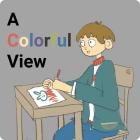
Color Vision Deficiency (CVD) is a reduced ability to distinguish colors, which currently affects 1 in 12 men and 1 in 200 women globally. Individuals with CVD reported that they’ve faced judgments from their peers and teachers, especially in their teen years. However, few products in the current market address this issue. Thus, we aimed to help teenagers with CVD achieve reconciliation with themselves so that they can cope with CVD in a healthy way. We developed an interactive journal game about the emotional journey taken by a boy with color vision deficiency named Bobby — A Colorful View.
Project Logo

BIPOC Representation in Picture Books: Asynchronous Tools to Engage with Diverse BookFinder's Framework

Diverse BookFinder critically reframes diversity in picture books through identifying trends in BIPOC representation and providing resources for creating intentional collections that decenter whiteness as the dominant narrative. This capstone initiates developing asynchronous teaching and learning resources that complement existing tools. Through a sorting activity that connects dominant messaging trends and race/culture narratives, librarians, educators, and caregivers will grow their awareness of the impact of BIPOC representation and develop skills to expand their own collections. This project highlights the necessity of active engagement and reflection around which books we read, whose stories we value, and how experiences inform narratives.
Project Logo

Catch a Cry

Doctors and parents in clinical trials face significant difficulties in tracking babies’ cries. The current method, handwritten crying logs, is inaccurate and offers little insight for clinical personnel. This project aims to use machine learning algorithms to more accurately identify and track cries. Hours of crying data were gathered and transformed into t-Distributed Stochastic Neighbor Embedding, Support Vector Machine, and k-Nearest Neighbor algorithms, visually grouping audio clips by sound similarity. An audio debugger determines the accuracy of the groupings. With continued training and testing, the algorithms will be able to engage binary classification of cries.