
iSchool Capstone

2019

Project Logo

Preserving Historic Media at the Seattle Art Museum

SAM’s Historic Media Collection is home to a rich body of archival material documenting key moments in the history of the museum, Seattle, King County, and the Pacific Northwest. The preservation of this collection is urgent as a majority of the content exists solely in unstable media formats. This capstone was a case study for a potential large-scale preservation initiative for this collection. 60 items about the Seattle Asian Art Museum, held in a variety of formats, were digitized to current preservation and access standards. Collection policies pertaining to rights management, collection scope, and workflow were also developed.

Project Logo

Prisons and Policing Public Records Management

Increasingly, public access to civil lawsuits against law enforcement agencies has been restricted from federal to local levels. Through the use of public record requests, the Human Rights Defense Center has collected over 8000 civil cases from seven different states. Their goal: to create a publicly accessible and empirically analyzable database of civil lawsuits against law enforcement agencies all across the country. Our team has built the underlying structure for this larger project, developing a Descriptive Metadata Schema, Controlled Vocabulary and Claim Type, Controlled Vocabulary and Dictionary for Document Type, and Standard Operating Procedures for court record ingest and documentation.
Project Logo

SmartInvest: Sentiment Driven Insights using NLP

It is a nightmare for fundamental securities analysts and portfolio managers to leaf through lengthy corporate filings and call transcripts to gain insights on which stock to invest in. Our project automates this process using NLP tools and generates sentiment/credibility index. These indexes are used to create an all-inclusive dashboard that displays a company’s performance, its overall ranking, ranking within its industry, current trends in the market and popular buzzwords in different industries. The portfolio managers can then use the dashboard to make smarter investment decisions. Do you also wanna make your investments more profitable? Try SmartInvest!
Project Logo

The Thomas Handforth Digitization Project

Thomas Handforth was an artist, author, and winner of the 1939 Caldecott Medal. After his death, the Tacoma Public Library agreed to archive over 900 pieces of his artwork. The main objective of this capstone was to organize, digitize, and catalog the most fragile and friable pieces in the collection for online accessibility to the public. I scanned and photographed, created metadata, and integrated the digital files of his art into the library’s online catalog. For too long Thomas Handforth has been unknown. By creating this catalog, users will be able to learn more about this incredible artist.
Project Logo

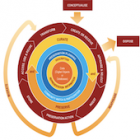
Theoretical Foundations for Updating DCC Curation Lifecycle Model

The DCC Curation Lifecycle model is a conceptual model created in 2009 to facilitate curation and preservation activities. Since its initial creation, the context of data (e.g. the emergence of Big Data) has changed dramatically. In this project, I studied the needs and possible fields for updating this model through a close examination of literature about the original model, relevant research and data lifecycle models, and interview materials. Based on the implications of the four most relevant lifecycle models studied, recommendations on the transformation of model structure and content are made.
Project Logo

Unlocking Metadata for Streaming Audio Resources

Cataloging streaming audio resources ensures streaming audio content is accessible and discoverable. However, many records do not adhere to standardized file formats. These errors cause increased workload and lost work hours. Enhancement of streaming audio metadata can be addressed in multiple ways: facilitating metadata conversations with content providers, original cataloging of streaming audio resources, and creating recommended best practices. This project focuses primarily on creating best practices and demonstrating those practices in original cataloging records. Through establishing best practices for creating streaming audio metadata, this project takes an important first step toward improving accessibility and discoverability of streaming audio resources.

2018

Project Logo

Classifying Images Using Computer Vision

The digitization of art images has created new opportunities for artists, researchers, and students to explore visual arts. However, many digital art libraries are difficult to navigate. This is because they lack metadata to describe their images, which makes finding images based on their content hard. We applied computer vision techniques to a dataset of art images to create an art recommendation system.
Project Logo

Collection Assessment, Ebooks vs. Print Books: Usage by patron, format, and subject area within the context of Alliance resource sharing

The Clark Library serves over 5,000 patrons at the University of Portland. I conducted a collection assessment to understand user behavior and determine areas of growth for ebook resources. I compared usage of ebooks and print books by subject area using ILS data, consortium reports, and vendor reports. The assessment revealed valuable relationships between format preference, users, and subjects, especially in the humanities disciplines. The strengths and weaknesses of each subject area and format will inform collection development decisions for future budget years and will benefit the library patrons by more closely meeting their research demands.
Project Logo

DiscoverEd

DiscoverEd is a web application that helps special educators find technology to support students with special needs. Special education programs in the US are on the rise, with 30% growth over the last decade, and encompassing both disability needs and supplemental needs programs. However, special educators struggle to find the right technologies to fit the needs of their students, spending time scouring the internet looking for answers. DiscoverEd will become your closest colleague, learning about your teaching environment and then connecting you to the best technologies for your students, and fostering a collaborative community for like-minded special educators.
Project Logo

Don't Fear the Reaper

Intro: Most research projects begin with a hypothesis and end with data confirming or disproving it, but how do you go about a research project in reverse? If the data has already been collected, how can a research team turn it into meaningful information? This presentation covers the process of investigating death images submitted in a university classroom over the past 20 years for general themes and insights on undergraduate perceptions of death.