
iSchool Capstone

2017

Project Logo

StreamSurfer

StreamSurfer addresses the issue of online legal streams being difficult to find, and users not knowing which sources are legal or illegal. For example, if a user were to search for a movie or TV show on a popular search engine they’d get legal and illegal results as well as non-stream results. StreamSurfer solves this by creating a search engine specifically for online legal streams of movies and TV shows. Users can search for a show or movie, returning back links to online legal streams for that show or movie, as well as information about the movie or TV show.

2016

Project Logo

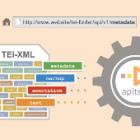
Apitext: An API for TEI-XML Transcriptions

For over twenty years the Text Encoding Initiative (TEI) has managed and developed a set of encoding guidelines for the representation of humanities, social science, and linguistics -- to preserve and share -- texts in digital form. Using Extensible Markup Language (XML) as its backbone, TEI is the generally accepted encoding model for the digital humanities. Due to XML’s extensible nature, it can often be difficult to share these files, and problematic to make them interoperable. Our Application Programming Interface (API) for TEI-XML documents addresses these challenges. It requires no prior programming experience to use, can be installed using standard File Transfer Protocols (FTP), and is able to return multiple interoperable views of a TEI-XML file using a Uniform Resource Identifier (URI) as its method of query.
Project Logo

Beaverton Symphony Orchestra Sheet Music Collection

The Beaverton Symphony Orchestra (BSO) is an-all volunteer community ensemble in Beaverton, Oregon. In more than 30 years, the organization has amassed a collection of more than 220 separate works, with dozens of parts for each. The sheet music library lacked any digital cataloging or inventory system, making it difficult for the music director to select works and for the volunteer music librarian to keep track of the collection. I assessed and weeded the collection, researched cataloging systems and recommended a free online option (musiclibrarian.net), established metadata schema, developed unique identifiers for parts and works, and cataloged a sample selection of music. This new system provides better management and access of the collection at no cost to the orchestra, which will assist with future programming, allow easy addition of future works, and support the BSO’s mission of providing quality, affordable classical music and outreach to the community.
Project Logo

Boise State University Digital Theatre Costume Collection

A growing number of institutions are creating digital collections of historical costumes, but the same cannot be said for theatrical costumes. This form of non-traditional academic scholarship continues to go unmarked in the world of repositories with the exception of small collections of production stills. While a joint effort, there are separate elements of theatre (scenery, costumes, etc.) that should be documented with context for study and recognition to their corresponding designer(s). Constructed garments themselves are often altered and reused for subsequent performances making these pieces quite ephemeral in nature. This collection marks the beginning of Boise State University’s digitized costume collection that brings recognition not only to the designer, but also to the institution’s contribution to the theatre arts. The repository provides a means of officially publishing these records, which include not only photographs of select finished garments, but also renderings created by the costume designer himself.
Project Logo

Data Archeology and Human Rights: Documenting the Data of El Salvador’s Civil War

From 1979 to 1992, El Salvador was engulfed in a bloody, political civil war, with over 75,000 civilian casualties. In the early 1990s, several NGOs and a UN Truth Commission began systematically documenting human rights atrocities perpetrated during the war, using personal testimonies, military records, and other documents. Each database was designed differently, utilizing the technologies available at the time. These files changed hands multiple times over the next 25 years, with limited accompanying documentation; information about metadata values has long been lost. Working with the UW Center for Human Rights and the Human Rights Data Analysis Group, our team developed a data management plan and an initial data dictionary for one database. Researchers ultimately hope to examine, standardize, and map fields across databases, providing a fuller picture of the human rights violations committed and supporting the efforts of surviving family members, scholars, and legal teams for truth and accountability.
Project Logo

ForWord

Often when people come across words they do not know, they search for definitions and find them quickly to get through the line they are reading. But for vocabulary to be memorized long-term, there must be spaced repetition of studying over a period of time. Currently, there is no way to seamlessly curate vocabulary without interrupting one’s daily flow and effectively study said vocabulary until mastery. ForWord incorporates a browser extension and a gamified platform in order to accomplish these things. ForWord’s target audience is college level English Second Language learners, however anyone user can improve their English skills. Special algorithms are utilized to make word recommendations based upon one’s interests and vocabulary level and to engage them using a gamified platform. If used on a regular basis, ForWord can aid in improved mastery of the English language, heightened eloquence, and the ability to read even the most verbose books.
Project Logo

It's Official: Locating the Generic in Sports

What about officiated sports makes them all the same? What makes them different? Perhaps the rulebooks used to govern them can tell. Regulated sports offer controlled environments in which participants operate for fame, fortune, self-improvement, camaraderie, and other reasons. Rulebooks not only shape these environments, but also regulate behavior within them. With society as the oyster and our human passions as grains of sand, how do the official rules of sports help culture our pearls? I took a whack, a shot, a leap into modeling sports, from the perspective of the humble sports rulebook. In my research, I explore why and how to go about deriving a genre-based model of sports. I also identify possible applications of this model serving diverse audiences including scholars, policy analysts, and athletes. Rulebooks have long been used to organize knowledge on sports – what’s needed now is a better way to extract this knowledge.
Project Logo

Knowledge Organization in Transmedia Fictional Worlds: A Study of Harry Potter, Lord of the Rings, Marvel Universe, and Star Wars

Currently there is no structured data standard for representing elements commonly found in transmedia fictional universes. To address this information gap, we have created an ontological model that will allow researchers, fans, brand managers, and creators to search for and retrieve information contained in these worlds based on their structures. Our process included a domain analysis and user studies based on the contents of four transmedia works in order to build a new model using Ontology Web Language (OWL) and an artificial intelligence reasoning engine. This model can infer connections between the transmedia elements and will facilitate better search and retrieval of the information contained within these vast story universes for all users interested in them. The result of this project is an OWL ontology that is intuitive for users; can be used by AI systems; and has been updated to reflect real user needs based on user research.
Project Logo

Making Connections with Linked Data: Identities and Identifiers at University of Victoria Libraries

Making Connections with Linked Data: Identities and Identifiers at University of Victoria Libraries Robbyn Gordon Lanning (MLIS) Linked data empowers libraries and archives to connect rich stores of local data to global audiences through the use of common identifiers and standards. The University of Victoria (UVic) Libraries possesses over 2.9 million records, each of which uses text strings as resource identifiers. In order to participate in the semantic web, UVic Libraries must prepare its metadata, transitioning its records from textual representations of people, places, and subjects to internationally accessible Uniform Resource Identifiers (URIs). To assist UVic in meeting this challenge I implemented a study reconciling randomized datasets from each of UVic’s four record repositories to linked data identifiers. This research culminated in a report providing detailed reconciliation results, suggestions to overcome obstacles encountered, and best practice recommendations for future reconciliation work. By assisting UVic Libraries in preparation for transitioning its “strings” to “things”, this project has helped enrich the exposure, interoperability, and accessibility of UVic’s information holdings.
Project Logo

RCMD:ME, A Media Explorer

Before RCMD:ME, media recommendation services solely recommended media based on user’s preferences within the same media type. For example, GoodReads recommends books to users based upon other books they like. However, there are no recommendation platforms which bridge multiple media forms--such as someone who likes The Road might want to find musical artists, movies, and books that other users who like this book also like (e.g. 67% of people who like The Road also like Apocalypse Now). We have developed a recommendation service which has created a new way to find relationships between different forms of media that are otherwise unknown. Our service allows artists to gain exposure in a way that respects independent artists and strengthens ties between print and digital media. With RCMD:ME, users are able to find new media more easily, decreasing wasted time and frustration, and ultimately improves the media discovery process holistically.