The 2026 UW Information School Alumni Impact Awards honor a startup entrepreneur and an expert in value-sensitive design, both working at the forefront of the AI revolution.
Distinguished Alumni Award recipient Prem Kumar, Informatics ’06, is the CEO of Humanly, a startup he founded in 2020. Humanly is a job candidate recruitment platform that uses artificial intelligence to automate candidate evaluation for employers, as well as to aid job seekers in their job search and career development. Humanly has grown rapidly in the past few years, serving more than 200 companies and raising $48 million in venture capital.
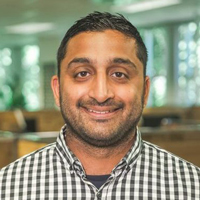
Under Kumar’s leadership, Humanly embraces an ethos of “AI done right,” prioritizing fairness, transparency and privacy in its systems and working to remove bias from hiring processes. Kumar traces those values to his time in the Informatics program, where, he said, “There was an underlying purpose behind using the power of information in technology to make the world better, not just make money.”
As a student, Kumar recalled thinking that “product, data and people are the three things that I care about a lot.” He followed his undergraduate education with a job in product and operations leadership at Microsoft, leading a rebuild of the company’s human resources portal. In 2016, he left for the role of product director at TINYPulse, an employee engagement software company, where he gained experience at a startup before launching his own.
Now Kumar shares his experiences as a startup founder with students at the Information School, appearing frequently as a guest speaker and advising the iStartup Lab.
“I’m very proud to be honored in this way, and am also proud to just be a part of the iSchool community and the work so many have done to create the impact it has today,” he said.
While the Distinguished Alumni Award recognizes alumni who have made significant and exceptional contributions to the information field and their communities, the Graduates of the Last Decade (GOLD) Award honors more recent graduates.
This year’s GOLD Award recipient, Steph Ballard, Ph.D. ’23, MLIS ’17, is a director of Responsible AI at Microsoft. In a fast-changing environment, Ballard stays on top of regulatory changes around the world and provides clear guidance to engineering teams to ensure the company’s products are built responsibly.

As a Master of Library and Information Science student, Ballard leaned into the more technical aspects of the program, taking courses in data science that help her now as she works with engineers and developers. After completing her MLIS, she joined the Information School’s doctoral program and focused on Value Sensitive Design, working under Professor Batya Friedman.
Friedman, along with Professors David Hendry and Ryan Calo, encouraged her as she aspired to join industry rather than academia after graduating. “I always felt very supported and challenged and pushed by the faculty, knowing that was going to be the direction that I headed in,” Ballard said.
She applies her experience from the Value Sensitive Design Lab and Tech Policy Lab in her work at Microsoft, whose responsible AI standards are used by organizations across the technology sector. The standards are composed of six principles that should guide AI development and use: fairness, reliability and safety, privacy and security, inclusiveness, transparency, and accountability.
Regulators such as federal agencies and lawmakers in dozens of states have enacted policy changes in the years since Ballard joined Microsoft. In her role, she is both reactive and proactive, tracking the changes and anticipating what will come next.
“We're thinking about a lot of what regulators care about — things like fundamental rights and accuracy,” she said.
Putting human values at the center of technology design is an idea that traces directly to Ballard’s time in the Information School.
“A lot of what we did in the VSD Lab and the Tech Policy Lab was thinking about how we can bring these ideas to be more prominent in the development of different technologies and policies,” she said.