
iSchool Capstone

2016

Project Logo

3D Design Club

Seattle Public library is interested in purchasing technolgies for the youth which can be used for learning. One of the projects is the Minecraft club. It is a learning sessions for youth to learn the process of designing characters, prototyping, and creating a story out of the character. In implementing the project, there are information gaps in the management and implementation process. The first one is between librarians familiarity with the content and the purpose of the project. And the other one is between librarians facilitation skills with technology and youth development. To fill these gaps, our capstone group will look at the curriculum of the 3D printer club and try to find ways to revise the curriculum which will make a successful session for the children.
Project Logo

Conducting a Community Needs Assessment of LGBTQ Youth for Kitsap Regional Library

Kitsap Regional Library, as part of its Vision 2020 Strategic Plan, seeks to build community through a series of community conversations where participants will be given the opportunity to share their aspirations for their communities and identify community needs. This project will operate within the spirit of this initiative by identifying the needs of the lesbian, gay, bisexual, and queer-identified (LGBTQ) youth population in the area, a population that has historically been underserved in our broader society and whose needs have not been overtly sought after and met by this institution, and determine what existing or new library services might help to address those needs. A combination of surveys and personal conversations will be administered to gather input from youth on their various information needs. From there, an intervention will be designed to address an identified information gap, which will be available for future use and implementation by Kitsap Regional Library.
Project Logo

eBooks for a Suburban Middle School

According to a recent national study of ebook usage, between 2013 and 2014 demand for ebooks grew more among middle school students than any other educational group (School Library Journal, 2014). Gildersleeve Middle School is BYOD (bring your own device) but the library’s collection includes only two ebooks. Our project was to develop a complete proposal for an ebook collection that would significantly expand the existing collection and reflect the culturally and linguistically diverse student population. We developed a proposal that detailed students’ information needs, evaluated several vendors, proposed specific titles for acquisition, developed a budget, and outlined innovative ways to promote the new collection. Now, thanks to this project, the librarians at Gildersleeve have a complete proposal for developing a new ebook collection, as well as a list of recommended ebooks to purchase. The only thing left for them is to implement the proposal and grow their ebook collection.
Project Logo

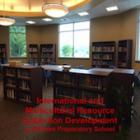
International and Multicultural Resource Collection Development at Willows Preparatory School

Willows Preparatory School (WPS) is a private institution affiliated with Bellevue Children’s Academy in Redmond, Washington. While the elementary school was established in 2000, WPS is only in its second year, therefore, the library is relatively small and consists largely of donated resources. Despite the small size, the new librarian has created an excellent base of resources in nonfiction and a good selection of new and popular books. As an International Baccalaureate (IB) candidate school, with a diverse student population, WPS is looking to add more international and multicultural resources that will both interest the students in their personal reading, support the school’s curriculum, and meet IB standards. With this in mind, my goal was to cultivate high quality international and multicultural resources that the librarian can immediately add to her emerging library.
Project Logo

Kaleido

We seek to expose young children to diverse groups of people from different cultural backgrounds through an interactive storytelling app. This application will serve as an example that diversity, social awareness, and empathy can and should be incorporated into everything that we do. The interactive aspect of our story app will allow children to make decisions for their characters and see how the consequences affect them and the other characters in the story. Our aim is to have parents download this app for their children and encourage them to play it in order to teach them about stereotypes that currently exist and how they can combat them. We also want parents to guide their children through the stories and educate them on specific social issues as they are following the story.
Project Logo

LIBROS: Librarians Incorporating Bilingual Resources for Outstanding Storytimes

LIBROS is a digital toolkit which was created to address a gap in children’s services in the North Central Regional Library system (NCRL). Although many households in NCRL’s service area are bilingual or Spanish-speaking, the majority of library branches don’t offer dual-language storytime programs. Staff cited two main reasons for this: lack of confidence in their own Spanish skills and not knowing how to select Spanish-language storytime elements such as books and songs. Several employees simply said, “I just don’t think I can do it. LIBROS aims to solve this issue by acting as an online resource where library staff can learn how to incorporate basic Spanish words and concepts into storytime. Interactive modules provide storytime examples, suggested books and media, and downloadable files. The end goal is multifaceted: to empower and encourage librarians, increase library patronage, and touch the lives of families through the magic of libros—books.
Project Logo

Middle Years Programme (MYP) Research and Information Literacy Scope and Sequence

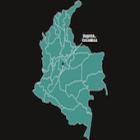
Colegio Anglo Colombiano is an International Baccalaureate school located in Bogota, Colombia. The Anglo did not have a clear scope and sequence or curricular framework for MYP (grades 5-9, 6-10 in USA) research and information literacy skills. This capstone will address that void. Following the development of the scope and sequence, the ultimate goal would be implementation in all MYP classes, not just in the library. I will continue at the school next academic year to ensure this. There is also a PR element of the project, letting teachers know that the document exits and how they can use it even if the librarian is unavailable. Teachers will be highly encouraged to partner with me for at least one project in the year en order to ensure students are coming into the library and being exposed to the program regularly. Student’s information literacy skills will greatly benefit from this program.
Project Logo

Project Spark

Students are not being exposed to user-centered design and other Informatics topics in high school. We have found that many currently in the field did not discover such topics until their second year in college. With the demand for user focused critical thinking on the rise, Project Spark hopes to bridge the gap by introducing these topics earlier in the education system in order to spark interest. We bring college students to the high school classroom in order to give high school students a taste of what they can do with user-centered design. Our goal is to simply get more students interested in design thinking within the context of technology in the information age.
Project Logo

Re-Imagining the Spectrum of Library Experience

Re-Imagining the Spectrum of Library Experience Diane Clark, Online MLIS, Aryn Orwig, Online MLIS, Kat Redniss, Online MLIS, Susen Shi, Online MLIS Autism Spectrum Disorder (ASD), is an enigmatic condition that can make accessing community resources challenging. In the United States, 1 in 68 American children are on the spectrum, a significant increase within the last half-century. Many public libraries offer programs for children with autism, however there is a lack of services dedicated to young and emerging adults with ASD, a community that often gets overlooked. We have created an adaptable toolkit housed in a user-friendly website that supports public libraries in creating more inclusive spaces, services, programs, and customer service approaches that better serve individuals on the autism spectrum. This digital toolkit supports libraries in breaking down barriers of access for individuals on the spectrum, in turn, encourages more meaningful engagement in programs and library services. The toolkit serves to reduce reticence among staff, empowering librarians to engage administration in a dialogue about best practices for serving the underserved.
Project Logo

Researching Improvements for the Puyallup Library’s Youth Services

The Puyallup Public Library serves the citizens of the city of Puyallup in Washington state. They enjoy a youth services department comprised of two children’s librarians and a teen librarian. My project focused on analyzing the current services of the children’s librarians, researching things they could do to improve their services, and offer recommendations based off that research. My analysis indicated potential improvements in marketing and programming evaluation strategies, my research indicated specific marketing strategies and evaluation rubrics that would be applicable, and my recommendations were tailored specifically to the Puyallup Public Library. My research project offers two things primarily to the children’s librarians. Not does it offer recommendations with objectivity realistic marketing strategies, but those recommendations take the personality and unique customer base of the Puyallup library into account. Put another way, my recommendations seek to supplement the children’s services, not replace them.