
iSchool Capstone

2023

Project Logo

COVID67

Low-income populations often have limited access to COVID-19 testing opportunities. This inspired Virufy, a non-profit organization, to develop a mobile-based solution that utilizes an artificial intelligence (AI) model to rapidly diagnose COVID-19 through a cough recording. To properly train this model, Virufy needs a large database of annotated cough recordings; however, the current method of annotating data is outdated and disorganized. To streamline their annotating process, we developed a web-based audio-annotating tool that heavily utilizes the open-source library Label Studio, which will enable the crowdsourcing of audio annotations on the cough samples and support Virufy in improving their AI model.

Project Logo

dService: Empowering Your Data Science Journey

dService provides international students with detailed information and personalized insights on over 50 US-based data science master's programs. The "by students for students" project simplifies the process of selecting a graduate program and provides helpful information to international students. dService is a one-stop shop for all their needs, providing accurate and up-to-date information that empowers students to make informed decisions that align with their academic and career goals.
Project Logo

Interactive Data Visualization for Distributed Acoustic Sensing

Geohazards in the Pacific Northwest cause significant annual financial losses. To address this, the University of Washington's Photonic Sensing Facility (PSF) collects seismic data using advanced Distributed Acoustic Sensing technology. Their primary objective is to develop a user-friendly web application for widespread data access and visualization. The target audience includes researchers, public scientists, geohazard enthusiasts, and educators. This initiative aims to enhance geohazard monitoring, mitigate risks, and promote knowledge sharing. PSF's efforts contribute to addressing the pressing issue of geohazards monitoring while facilitating collaboration and informed decision-making.
Project Logo

Market Maps - Empowering Customers with Targeted Market Segments

Market maps groups companies providing similar services together for industry analysis. Its optimization addresses limitations of manual creation and user customization. Through NLP techniques including keyword extraction and topic modeling, we have achieved improved segmentation, better naming, enhanced brand-image and credibility. The project's results include automation of a cumbersome manual task and faster refresh, resulting in reduced latency and improved customer experience. By enabling customers to find companies in newer segments as a starting point for research, our project makes a significant difference in the lives of investors, entrepreneurs and stakeholders, empowering them with accurate, timely insights for better decision-making.
Project Logo

Netprism: Comparing Product Pricing with the E-Telligence API

E-commerce has been around for a while, however, shoppers are faced with decision paralysis with the abundance of options available online. Our backend technology, E-Telligence API, automatically searches the web to identify other websites where a specific product is available, enabling shoppers to compare prices and make an informed decision quickly. Our sponsor, NetPrism, plans to add this technology in their browser extension.
Project Logo

Project Anemone

Starfish Space worked with our team to redesign their data platform. Starfish Space engineers and analysts interact with hundreds of files with many different data visualizations every day without a modern, easy-to-use platform to organize and navigate their data. Anemone is an updated data visualization platform enabling Starfish Space employees to read and analyze satellite mission data faster to support future satellite missions with more efficiency and customizability.
Project Logo

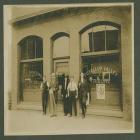
Puyallup Public Library Historic Project

The project's goal is to digitize all the physical records, documents, artifacts, photos, that have originated from and around the Puyallup area. These digitized objects will then be uploaded onto the Puyallup Public Library website for local use.
Project Logo

Real-time Speech Emotion Detection

This project focuses on the development of conversational analytics and AI solutions for Seasalt.ai, aimed at analyzing real-world speech data for insights. Multiple Machine Learning models were implemented, with Convolutional Neural Networks (CNN) demonstrating the highest accuracy improvement of approximately 67%. The CNN model effectively identifies emotions from audio data clips, enhancing conversational analytics within Seasalt.ai's product SeaMeet. Extensive experiments and evaluations have been conducted to validate the effectiveness of the CNN-based approach, showcasing its potential for real-time applications such as affective computing, virtual assistants, and emotion-aware human-computer interaction.
Project Logo

Svoboda Diaries Text Encoding Initiative Project

Building upon the work of a previous project, we have expanded and enhanced the Text Encoding Initiative (TEI) guidelines for application to the Svoboda Diaries. The Project had an initial set of guidelines but were seeking a more robust model for representing the intricacies of the diaries. In this project, we developed a Svoboda specific schema, established a method of encoding the margin notes, and provided training materials to ensure the sustainability of this initiative. These resources bring the Svoboda Diaries Project one step closer to digitally representing the diaries in their collection and making them more accessible to researchers.
Project Logo

The Gender Gap in Gaming

The gaming space and culture have been known to be discriminatory and toxic towards women online and in the workplace. Our team has worked to develop an interactive website that informs users about the gender gap in the gaming industry while providing them with a platform to share their experiences with gender discrimination. We have included data visualizations from pre-established datasets, created a form automatically updating visualizations for our users to submit, and provided an extensive list of video, text, audio, and event resources for our users to explore.