iSchool Capstone

2018

Project Logo

Cataloging Photographs at The Arsenal: Phase II of establishing a research library at The Washington National Guard Museum

The hardworking board members and volunteers of the Washington National Guard Museum have dedicated themselves to collecting, preserving, and displaying the rich history of Washington State’s brave military personnel. By continuing initial cataloging efforts of the Museum’s vast photographic collection, and beginning to make the entire collection available through an online database, our team helped further the Museum’s mission to instruct, inspire and educate all citizens. This project ensures the Museum’s goal of becoming an essential research library will soon become a reality.
Project Logo

Connecting Historical Materials to Each Other and the World: Creating Finding Aids for UW Special Collections

For my capstone project, I processed and created finding aids for five visual materials collections from UW Special Collections. As a result of this project, materials that were previously inaccessible to researchers are now contextualized and fully searchable through Archives West and UW Digital Collections. Multiple steps had to be taken in order to make the materials accessible: researching and arranging materials, housing materials in appropriate archival housings, encoding materials using the XML publishing program XMetaL Author, scanning images and creating digital surrogates, and revising finding aids based on the feedback of UW’s Visual Materials Curator Nicolette Bromberg.
Project Logo

Digitization and Cataloging of the Center on Contemporary Art's Slides and Newsletters

The Center on Contemporary Art (CoCA) Digital Archive was created with the goal of cataloging and digitizing slides, posters, audiotapes, videos, photographs and ephemera collected over the past 35 years. We helped CoCA move closer towards that goal by digitizing selected photographic slides and newsletters, cataloging individual items, and posting them onto the CoCA website. We successfully added 9 exhibits from 1990-2002, digitizing and cataloging almost 100 slides, along with several CoCA newsletters (1983-1990). As a result, these exhibits will be accessible to the public, and will hopefully stir more interest to continue digitizing other materials collected by CoCA.
Project Logo

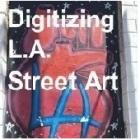
Digitizing L.A. Street Art

The city of Los Angeles consists of a diverse population sprawled over 500sq. miles. One unifying theme throughout the city is its love of artwork; street art has taken over the city, giving each borough its own culture and attitude. Street art defines the attitude of the citizens and presents a message, unlike graffiti, which is used to promote hate and fear. Many have tried to document the art throughout the city, but almost none have been trusted within the communities. Along with the Los Angeles Public Library, I have worked to begin a digital collection available to the public.
Project Logo

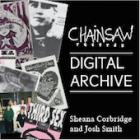
Digitizing Queer Punk History: The Chainsaw Records Collection

Chainsaw Records and zine were pivotal in defining the queercore movement of the late 1980s and 1990s. Founder Donna Dresch amassed a large collection of press clippings, flyers, posters, and zines over her career as zine author, musician and label owner. Until now, most of the materials were inaccessible and stored insecurely. We organized and digitized the collection, uploaded the files and metadata to a repository server, and sorted the physical materials into archival storage folders. The digitized, safely stored collection is now secure and available for our sponsor, fans, and those interested in queer cultural history.
Project Logo

Discovr

Virtualizing the physical for the world to discover.
Project Logo

Expanding & Promoting San Francisco History Center's Educational Offerings for Youth

The San Francisco History Center (SFHC) at the San Francisco Public Library’s main branch houses a wealth of primary sources and ephemera that document life in San Francisco. While SFHC has increased its classroom visits for youth in recent years, there is opportunity to better engage K-12 students by while following educational standards such as Common Core, California History-Social Science Framework, and Guidelines for Primary Source Literacy. This project investigates and recommends methods to streamline the educational offerings of the SFHC and design a sample lesson plan that equips students with primary source literacy and neighborhood research skills.
Project Logo

Fairytales & the Five-Year Plan: An Online Exhibit of Rare Russian Children's Books

My task was to curate an online exhibit for University of Washington Special Collections, highlighting the rare early twentieth-century Russian children’s books that were recently donated to Special Collections by the Harer family. I selected and digitized fifty of the most historically significant books, conducted background research, and wrote contextual essays on children’s book design, juxtaposing the pre-revolutionary dream-world of stylized ornament with the constructivist, geometrical forms of the revolutionary era. Now people throughout the world will have access to these important books, which are not only for children but are also works of art in themselves.
Project Logo

Interdepartmental Collaborations to Improve Access to Visual Resource Collections: The Patricia Young Collection

The Patricia Young Collection (PYC) contains over 10,600 35mm slides that visually document more than one hundred different architectural and archaeological sites from seventeen different countries in East and Southeast Asia. This slide collection will be uploaded to the School of Art + Art History + Design’s in-house MDID digital image database and then entered as compound object records into the University of Washington Library’s Digital Collections repository. The goal of this Capstone project is for the collection to reach a wider audience at the University of Washington and, by extension, researchers worldwide.
Project Logo

Life and Times in Seattle’s Chinatown-International District: A Collection of Oral Histories

The Wing Luke Museum's collection of Asian and Pacific Islander oral histories encompasses over 900 interviews. Users can request digital transcripts, but audio recordings can only be accessed in-person at the Wing. For this Oral History Project, we have curated nearly 200 interviews highlighting Seattle’s Chinatown-International District and its various communities; Relevant PDF transcripts and MP3 audio files are now available online through an Oral History website. Not only is this website beneficial for local users, but it is also a tangible tool for the Wing to reach users worldwide who are interested in the Wing’s Oral History Program.