Speakers & Workshop Hosts
Michelle Abunaja (she/her)
Environmental Justice Senior Policy Advisor | Seattle Public Utilities
Affiliate Instructor | UW College of Built Environments
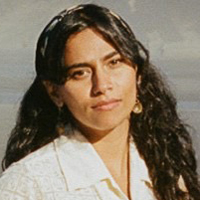 Michelle Abunaja leads environmental justice policy advisement for SPU's Water, Solid Waste, and Drainage and Wastewater lines of business which serve 1.5 million customers. She has over a decade of experience in policy development and engineering in both public and private sectors. In addition to her position on SPU's Corporate Policy team, she teaches courses on research design, professional development, and equity at the University of Washington College of Built Environments. Her initial interest in policy solutions for healthy communities was sparked by her early experience growing up in underinvested urban and rural neighborhoods and is maintained by her hope for more places which support both people and planet.
Eleonor Bounds (she/her)
Senior Analyst, Data Privacy & Responsible AI | City of Seattle, Information Technology Department
 Eleonor Bounds is a Senior Privacy and Responsible AI Analyst. She’s worked in tech in varying roles for over a decade and has a background in critical infrastructure, ethics, climate advocacy, and biological sciences. Her experience and expertise in gender & intersectionality has enabled her to think critically about and utilize various frameworks to challenge accepted norms in the workplace and around technology use. Eleonor has also partnered closely with organizations that provide services to children and abuse victim/survivors and has a special interest in working to create a supportive environment for the Neurodiverse Community both inside and outside of professional settings.
David Hendry (he/him)
Associate Professor & MSIM Program Chair | UW Information School
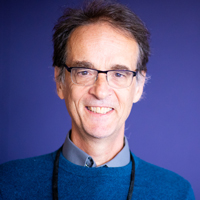 David G. Hendry is an associate professor at the Information School, University of Washington, where he teaches courses in human-computer interaction, information system design, and foundations of information science. He investigates tools, practices, and systems that create the conditions for sustainable, inclusive participation in the design of information systems. Working with the theory and method of Value Sensitive Design, he is currently conducting studies on the use of information systems by homeless young people and drop-in centers that support their welfare. He is a member of the Value Sensitive Design Research Laboratory. David also serves as an Adjunct Associate Professor in the Department of Human-Centered Design and Engineering.
He has published on information management in design, design education, search, and end-user programming. In 1998, before joining the iSchool in 2002, he created the User Experience Group at Lycos – one of the first internet search engines – where he conducted user research on a variety of internet search and communication products. He received his PhD in Computer Science from the Robert Gordon University, Aberdeen, Scotland in 1996. For his dissertation, he developed a user-interface architecture for implementing diverse families of information retrieval applications. He received his BA in 1986 and a MSc in 1989 in Computing and Information Science from the University of Guelph.
Wes King (they/them)
Assistant Teaching Professor | UW Information School
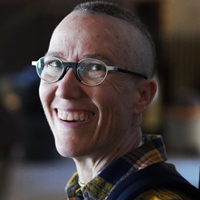 Dr. Wes Eli King teaches core informatics courses to undergraduates in the University of Washington Information School. They have been at the UW since 2013, starting as a graduate student and now as faculty. Dr. Wes brings over 20 years of technical writing and technical training experience to the classroom and offers a critical informatics lens for students to adopt as they develop their career goals and imagine the future of information. They are passionate about teaching and enjoy designing collaborative, peer-based learning environments. As an activist-researcher, Dr. Wes locates their research at the intersection of technology, religion, and gender. They completed their dissertation entitled, A Match Made in Heaven: Queer Christians and Dating Apps, at the UW iSchool in 2021 and teach a Special Topics in Informatics course on internet dating and the future of relationships. Dr. Wes has also developed a Special Topics in Informatics course on AI, robots, and transcending religion that brings together their research and teaching with their interest in science fiction and imagining futures.
Kris Tomasovic Nelson, CFA (she/her)
Global Head of Sustainable Investing & Senior Portfolio Manager | Russell Investments
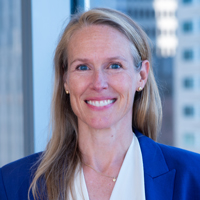 Kris is the Global Head of Sustainable Investing and a Senior Portfolio Manager in the Investment Division at Russell Investments. As a portfolio manager, she is accountable for manager selection, strategic portfolio construction, and integrating the firm’s capital market insights to dynamically manage portfolios that help clients achieve their objectives. In her sustainable investing role, she develops and overseeing the firm’s sustainable investment capabilities, including leading efforts to build ESG investment processes and infrastructure for Manager Research and Portfolio Management across asset classes, while overseeing the Active Ownership program.
Kris joined Russell Investments in 2016. Previously, she was a member of the firm’s Equity Manager Research team, where she was responsible for researching and ranking managers in the US and global value and sustainable investing product universes. She began contributing to the firm’s stewardship efforts as a member of the Active Ownership Committee shortly after joining Russell Investments. She was named Chair in 2021 and led a build out of the team and function.
Kris started her investment career at ABN Amro in broker equity research, followed by equity selection roles at asset managers including ForstmannLeff Associates, AG Asset Management, and Palisade Capital. At Palisade Capital, she was Senior Vice President responsible for equity investments in the consumer and technology sectors for U.S. growth strategies. Throughout her stock-picking career, Kris also covered companies in the media, telecommunications, autos, housing, and industrials sectors.
Belén Saldías (she/her)
Assistant Teaching Professor | UW Information School
 Belén Saldías is an Assistant Teaching Professor at the University of Washington Information School. Her research focuses on the responsible, human-centered design and evaluation of machine learning systems, emphasizing human-AI collaboration. In her Ph.D. at MIT, she explored how language models can support decentralized governance and increase user agency online. Saldías is committed to making the internet safer and more empowering, especially for children and marginalized communities, integrating machine learning and natural language processing with social science insights.
As an educator, Saldías teaches courses addressing pressing social issues such as Generative AI Ethics and Data Justice, alongside technical topics including Databases and Information Visualization. She views teaching as a relational practice, emphasizing self-awareness, strategic learning, rigor, and practical adaptability. Saldías earned her Ph.D. at the MIT Media Lab and the Center for Constructive Communication. Previously, she held positions at Harvard University, Google Research, Pontificia Universidad Católica de Chile, and several AI-focused companies and startups.
Lindsey Washburn (she/her)
Director of Engagement | Assessed Intelligence
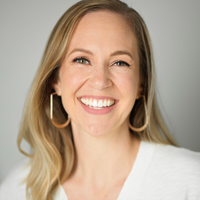 Lindsey Washburn leads engagement strategy at Assessed Intelligence and is building the Secure and Responsible Technology Lab to advance innovation at the intersection of security and ethics. With 15+ years bridging technology policy, responsible AI, and social impact, she is recognized for translating complex technical challenges into actionable policy and fostering cross-sector collaboration to ensure emerging technologies serve the public and planet's interest.
Heather Whiteman (she/her)
Associate Teaching Professor | UW Information School
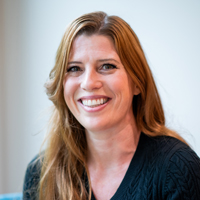 Associate teaching professor Heather Whiteman is a people data enthusiast. Heather brings an academic background focused on studying the art, the science, and the impact of measuring people at work. Her master’s degree work in industrial organizational psychology centered on the use of data and statistics to identify and mitigate the harm caused by discrimination in the workplace. Heather’s Ph.D. in the field of Human Capital Management focused on human performance and capability with an emphasis on identifying measurement techniques less susceptible to societal biases. Heather is an experienced educator, having taught statistics, data analysis, and management previously at universities based in the US, UK, and Guatemala. In addition to her role as assistant teaching professor at the University of Washington Information School, Heather will continue to offer a specialized course on People Analytics as an adjunct at UC Berkeley Haas School of Business.
Heather comes with years of applied, strategic leadership in preparing organizations for the future of work, digital talent transformation, and enabling a new future driven by fair data and people analytics insights. Her practitioner experience has spanned roles such as researcher, consultant, manager and executive and has stretched across areas such as equal employment opportunity, talent management, and strategic organizational planning; all with a focus on applying the power of data and analysis to drive outcomes for businesses as well as for individuals.
Heather serves as a Future Workplace Executive Fellow, a board and tech advisor to organizations focused on people data for good and has been selected as a Fulbright Scholar to Guatemala for 2022-2023. She also serves as a U.S. representative for the International Organization for Standards (ISO) Technical Advisory Group TC 260 focused on the creation of global standards for human capital measurement, reporting and public disclosure. Most recently having served as a registered expert in the creation of ISO 30415:2021 Diversity and inclusion, which provides the fundamentals for organizations wishing to create an inclusive workplace through actions, principles, measures, and the associated accountabilities and responsibilities.
Jason Young (he/him)
Assistant Professor, Director of TASCHA | UW Information School
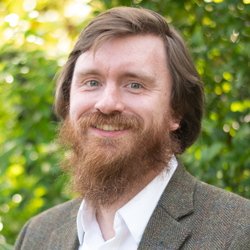 Jason’s work explores the intersection between technology, knowledge systems, and power. Jason is interested in understanding how technological practices—from the use of social media and AI to the spread of disinformation—are leveraged to make different kinds of knowledge visible (or invisible) and given authority (or marginalized). Jason’s research asks, for example, how the use of information and communication technologies is reshaping colonial hierarchies between Indigenous and Western scientific knowledge systems, and how socio-cultural dynamics produce vulnerabilities and attachments to misinformation. Jason’s projects strongly emphasize community-based, participatory approaches with applied goals, while also being inspired by and drawing from a broad range of postcolonial, feminist, and critical theories.
In addition to his research, Jason is the Director of the Technology & Social Change Group (TASCHA). TASCHA is a multidisciplinary center whose research explores the relationship between digital technologies and society, with an emphasis on applied work grounded in community engagement. One of TASCHA’s primary missions is to build and support a community of practice at the iSchool that is interested in critically interrogating the complex and rapidly changing relationship between technology, society, and the environment. In pursuit of this mission, TASCHA provides space and resources for students, faculty, and researchers to come together to collectively experiment with methods and processes that support ethical collaborations and cutting-edge, community-based research. Interested parties are encouraged to reach out to engage with TASCHA.